Infrastructure to Intelligence
Navigate the AI era with confidence. TCS helps you turn AI into a strategic partner that empowers talent, reimagines processes, and accelerates business transformation.
- Banking
- Capital Markets
- Consumer Packaged Goods and Distribution
- Communications, Media, and Information Services
- Education
- Energy, Resources, and Utilities
- Healthcare
- High Tech
- Insurance
- Life Sciences
- Manufacturing
- Public Services
- Retail
- Travel and Logistics
- Artificial Intelligence and Data & Analytics
- AI-led Data Centres
- Cloud
- Cognitive Business Operations
- Consulting
- Cybersecurity
- Enterprise Solutions
- Industrial Autonomy & Engineering
- Network Solutions and Services
- Sustainability Services
- TCS Interactive
Infrastructure to Intelligence
Industries
expand here
Services
expand here
Products and Platforms
expand here
Research & Innovation
expand here
About Us
We deliver excellence and create value for customers and communities - everyday. With the best talent and the latest technology we help customers turn complexity into opportunities and create meaningful change.
TCS Insights
Point of views, research, studies - on the latest themes - to help you expand your knowledge and be future ready.
Upcoming events
25 Oct 2026
TCS at Oracle AI World 2026, Las Vegas
19 Oct 2026
Meet TCS at OpenText World 2026
Want to be a global change-maker? Join our team.
At TCS, we believe exceptional work begins with hiring, celebrating and nurturing the best people — from all walks of life.
- Argentina
- Brazil
- Canada
- Chile
- Colombia (EN)
- Colombia (ES)
- Ecuador
- Mexico(EN)
- Mexico(ES)
- Peru
- Uruguay
- USA
- Australia
- Mainland China
- Hong Kong SAR
- Indonesia
- Japan
- Malaysia
- New Zealand
- Philippines
- Republic of Korea
- Singapore
- Chinese Taipei
- Thailand
Want to be a global change-maker? Join our team.
India
expand here
Americas
expand here
Asia Pacific
expand here
Europe and UK
expand here
Middle East and Africa
expand here
Management Commentary
expand here
Financials
expand here
News and Events
expand here
ESG
expand here
Resources
expand here
Top Results
Showing
10
01 - 07
TCS New York City Marathon
Watch how TCS built on innovation and belief.
2 MINS WATCH
You have these already downloaded
We have sent you a copy of the report to your email again.
Industry
Sports Sponsorships
This will open an overlay
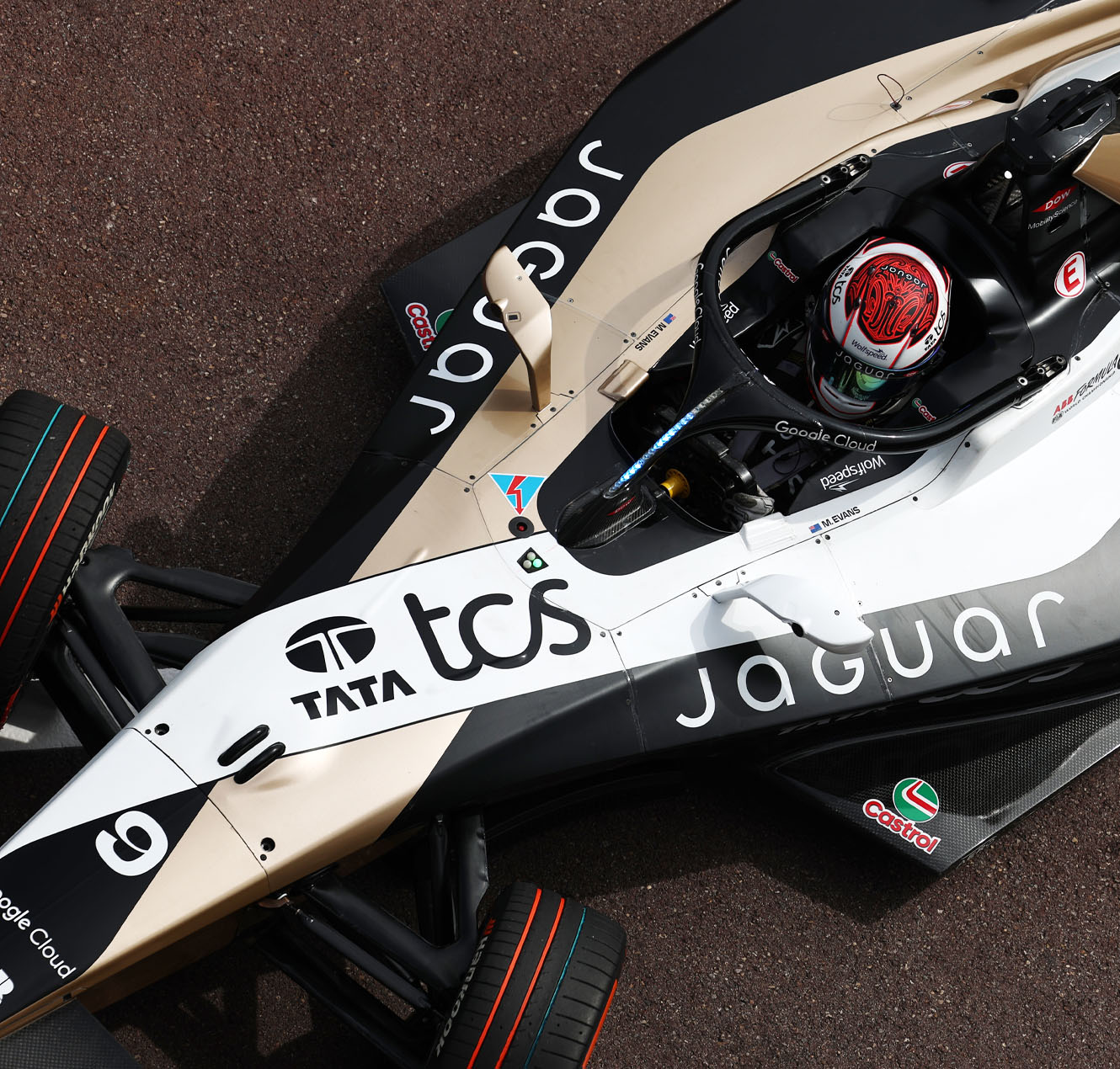
TCS Sports Sponsorships: Blending Sports Technology and Sustainability
We partner with 14 of the world’s most prestigious marathons including the Abbott World Marathon Majors and drive innovation at the Formula E races. Learn more.
Related Insights
Through the TCS Lidingöloppet event, we bring play, technology, and health innovation to support Astrid Lindgren Children’s Hospital. Learn how.
Article
22 Sep 2023
The team clinched the 2025/26 title at the finale in London and showcased the performance of the Jaguar I-TYPE 7 and the power of tech, innovation, and teamwork.
Blog
08 Sep 2026
Apart from revolutionizing professional running, this year’s marathon also raised record-breaking funds that will be made available to UMC for cancer research.
Article
08 Mar 2024
Highlights
- The 51st TCS New York City Marathon saw 47,839 runners from across 131 countries reach the finish line.
- The TCS New York City Marathon uses cutting-edge technology to connect people across the globe.
- The marathon app was downloaded 480,000 times, and people from over 150 countries tuned in to the event live.
In this article
Previous Slide
Next Slide
Back to Top
Go to top
In this articleinpage
Go to top
The one and only
One may have experienced several running events across the world, but very few can match the vigor and exuberance of the TCS New York City (NYC) marathon. The historic run, now in its 51st year, matched up to all the hype.
November 6, 2022, saw the marathon return to its full capacity for the first time since 2019, with 47,839 people from 131 countries crossing the finish line despite soaring temperatures. Among the athletes were 330 TCS clients, 112 TCSers, 49 members of the Team TCS Teachers Program, and notable personalities like actor Ashton Kutcher. The marathon course traverses vibrant, diverse neighborhoods with bridge climbs and millions of fans cheering by the side.
On Saturday, thousands of runners experienced the TCS New York City Marathon without having to run the entire 26.2 miles. The Abbot Dash to the Finish Line 5K allowed the participants to zip through the streets of Manhattan and complete the run at the famed marathon finish line in Central Park.
App-lift experiences
Since 2014, TCS has been the technology consulting partner and title sponsor of the New York City Marathon, and the partnership was recently renewed until 2029. From the race technology used to track runners to the finishers’ medal, the 2022 TCS New York City Marathon app transformed the experience for runners and fans alike. Here’s an interesting statistic: the average finisher at this year’s marathon was tracked 16 times on the mobile app.
This year, TCS ensured that the entire world witnessed the runners’ passion and grit in its full glory. For the first time in the history of major marathons, the professional men’s and women’s wheelchair and open division races were live-streamed on the app in their entirety, allowing fans to swipe between feeds and watch the race of their choice.
Created by TCS Interactive, the trailblazing Pro Runner Feed on the app allowed people in Kenya to watch their national heroes, Sharon Lokedi and Evans Chebet, break the tape at their TCS NYC Marathon debuts. The app users also watched Susannah Scaroni and Marcel Hug win the men’s and women’s races, respectively, setting course records, and folks from around the world tuned in more than 600,000 times using the TCS app. The Course Camera feature enabled family and friends to watch the participants at five key points along the marathon, including the finish line.
goIT challenge
TCS kicked off the marathon weekend by celebrating students, technology, and sustainability at the annual goIT Marathon App Competition. The students impressed judges and speakers alike with app concepts developed in support of the UN Sustainable Development Group Goal 11: Sustainable Cities and Communities. The winning team, Eco Road Runners, was an inspiring group of fifth graders from Breton Woods Elementary in Hauppauge, New York, and tutored by Team TCS Teachers.
Glory on display
One of the largest running expositions in the world, the TCS New York City Marathon Expo pulled together an array of New Balance sporting gear and accessories, including the official TCS New York City Marathon collection.
The Runners’ Wall, presented by TCS, featured the names of all 50,000 registered entrants. The TCS expo booth allowed the visitors to take 360-degree photos, explore Padzillas (super-sized phone displays), and view a full course video, also featured on ESPN’s Sports Center. Sports Center’s Instagram account reshared a reel of the TCS booth at the expo, generating over 473,000 likes, 4,400 comments, and 7.6 million views (and counting)!
In numbers
Swipe Right
Swipe Left
487,113
app downloads
313,941
viewed the Pro Runner Feed
324,668
viewed the Course Cameras
Related reading
Swipe Left
Swipe Right
What’s on your mind?
We’re here to help! Tell us what you’re looking for and we’ll get you connected to the right people.
Looking for something else?