Service
TCS Interactive

Humanizing Technology to Create Iconic Experiences
On this page
On this pageinpage
Introduction
In today’s experience economy, where memorable and engaging experiences have distinct economic value, the experience for everyone is the guiding principle around which all customer engagements revolve. But what exactly does experience for everyone mean, and why does it matter?
Grounded in a human-centric approach, experience for everyone ensures that every stakeholder—customers, employees, partners, suppliers, and communities - can collaborate in an ecosystem that delivers meaningful value. It matters because stakeholders expect brands to be inclusive, equitable, and socially responsible. By recognising and valuing each stakeholder, companies enhance brand perception, build trust, loyalty, and advocacy, ultimately increasing revenue and market share, which leads to sustainable growth.
Customer experience
Customers: Foster a sense of belonging
Customers want to be recognised, heard, and valued. When companies design experiences that cater to diverse groups of people, they promote a sense of belonging. An experience designed for all also helps brands tap into broader customer segments, often opening doors to underserved markets, including people with disabilities, older adults, individuals from diverse cultural backgrounds, and those affected by socio-economic disparities. A brand that prioritises inclusivity and accessibility makes people feel they are part of something bigger, leading to a deeper emotional connection.
AI takes emotional connectivity to the next level. It can be used to analyse individual preferences, allowing companies to tailor content, recommendations, and interactions that make groups of customers feel more valued and recognised. However, it can also amplify those custom experiences with hyper-personalisation, which goes far beyond basic personalisation tactics, such as using a customer's name in communications or offering generic product recommendations based on broad demographics. It utilises data analysis and advanced technologies, including generative and agentic AI, to gain a deep understanding of each customer's unique needs, preferences, behaviors, and financial goals, delivering highly relevant and timely interactions across all touchpoints.
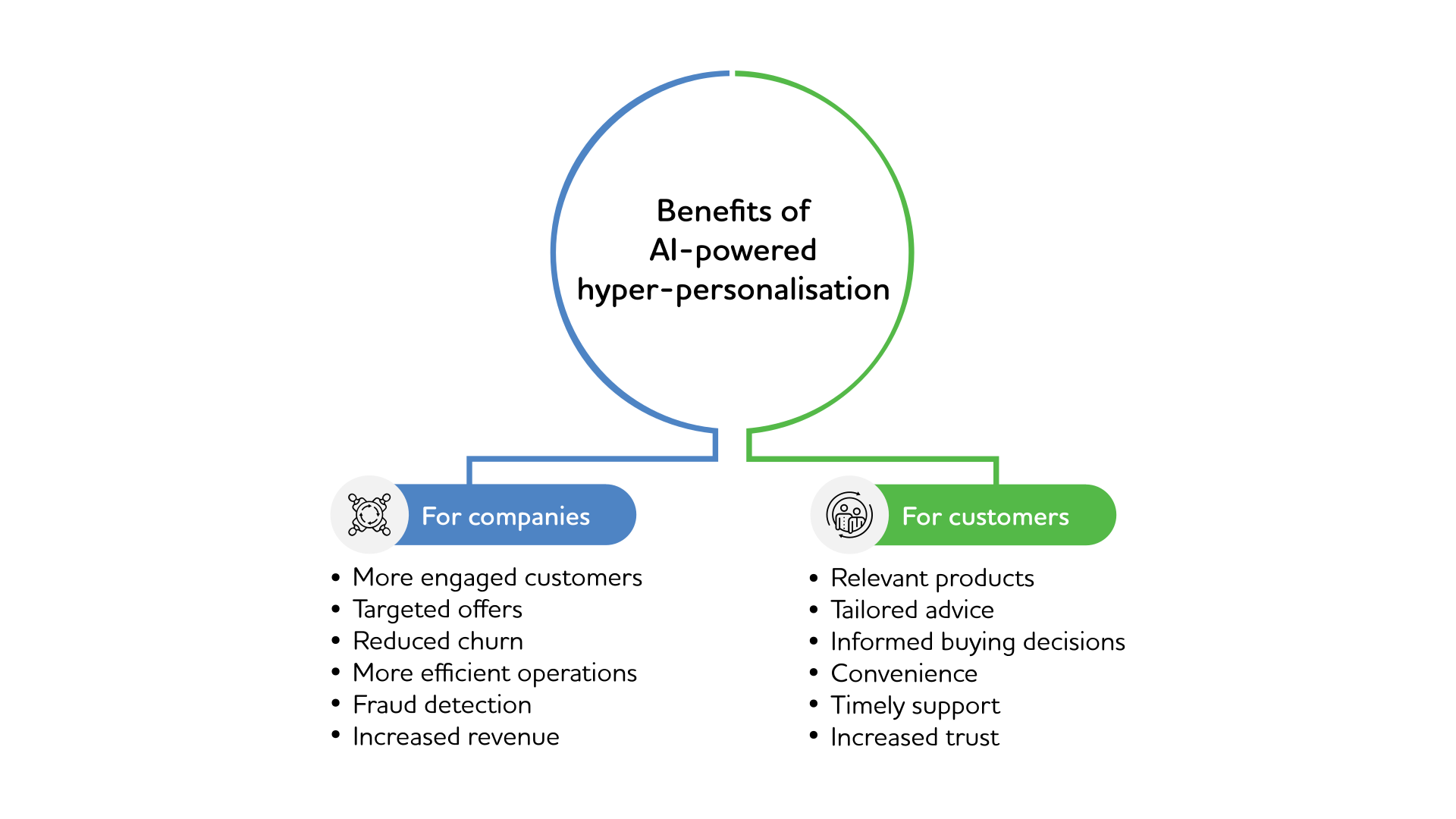
Benefits of AI-powered hyper-personalisation
Benefits of AI-powered hyper-personalisation
Benefits of AI-powered hyper-personalisation
AI also provides brands with a powerful way to bridge languages and cultures at scale, utilising translation tools to deliver messages that resonate while staying true to their brand. Companies can translate large volumes of text quickly and cost-effectively, making it easier to reach global audiences. However, human translators remain essential for refining translations, adding cultural context, and ensuring quality in more complex or sensitive content.
Employee experience
Employees: Empowerment drives better service delivery
Employees are on the front lines of customer interaction, and their experience significantly impacts how well they serve customers. When companies prioritise their employees' experiences, employees are more likely to be engaged, motivated, and empowered to deliver high-quality service. Empowered employees are more likely to demonstrate empathy when interacting with customers, thereby enhancing customer satisfaction.
With AI, employees have real-time access to accurate information, enabling them to serve customers quickly and effectively in the moment. GenAI, digital customer service, and conversational user interfaces are transforming customer service and support and making it easier for customers to get what they need.
For example, a leading U.S bank has been offering its AI-driven virtual assistant within its mobile app for several years, and clients have interacted with it more than 2.5 billion time. The bank has expanded the AI-assistant's capabilities to support individual and corporate clients in other lines of business, including an AI-enabled feature that quickly recognises complex requests and connects clients to a live specialist with relevant knowledge when needed, with a single click. More AI advancements are underway, including a GenAI tool that summarises call recordings to boost call center efficiency, keep the company aligned with client needs, and enhance customer experiences.
Partner experience
Partners and suppliers: Build trust in the ecosystem
When businesses consider the needs and values of their partners and suppliers, they create a strong, cooperative ecosystem that delivers more reliable products and services. Human-centric design emphasises building long-term, mutually beneficial relationships with suppliers, ensuring alignment with their commitment to sustainability and ethical practices.
Companies can leverage AI to enhance their commitment to ethical sourcing by analysing large amounts of data to identify potential ethical breaches, such as labor violations or environmental damage. AI tools can be used to anticipate potential disruptions or unethical practices, enabling businesses to take preventative measures and maintain compliance with ethical standards. Predictive AI tools can also help ensure that partners can meet service levels and supply chain needs.
Community experience
Community: Engagement builds brand loyalty
Companies that value and support the communities they serve create deeper connections. They can use AI-enabled sentiment analysis and social listening to understand community preferences and concerns across various online platforms. This allows them to personalise content and communication strategies, which in turn boosts engagement, as users are more likely to explore and interact when they discover valuable resources and shared interests.
Once again, chatbots can be used to offer instant support, answer common questions, and even offer personalised product or service recommendations. AI can also be used to moderate online communities, fostering a safer and more respectful space for interaction. By automating tasks like these, AI frees brand managers to focus on building genuine connections and strategising impactful initiatives.
This proactive approach to community management, combined with the ability to analyse user data and tailor experiences, strengthens brand loyalty and cultivates a sense of belonging, contributing to a more substantial and more valuable brand image.
As experience ecosystems evolve, experience for everyone increasingly encompasses machine customers—non-human, AI-driven economic actors such as digital assistants, bots, and connected devices that autonomously discover, evaluate, and purchase goods or services on behalf of people and organisations. Designing experiences that are clear, trustworthy, and aligned with human values ensures relevance for both human and machine participants within the same ecosystem.