Solution
Cloud

Enabling Enterprise Agility & Resilience with a Robust Cloud Strategy
Highlights
- Legacy mainframe systems, while reliable, are constrained by rigidity, siloed architecture, and a shrinking mainframe talent pool. These limitations restrict agility, data-driven operations, adoption of open-source innovations, and ecosystem integration.
- Generative artificial intelligence (AI) and agent-based architectures can transform core processes with natural language interfaces and real-time context from the physical and digital world, enabling adaptive, purposeful, and personalised experiences.
- A pragmatic modernisation approach, combining a four-phase AI Roadmap with incremental migration, can transform mainframe workloads into intelligent, cloud-native, microservices-based applications while mitigating risk and delivering measurable value.
In this article
In this articleinpage
Introduction
Businesses must modernise their legacy mainframe systems to stay competitive and agile.
As global economies evolve and technological advancements accelerate, this becomes a strategic imperative. Markets demand openness, collaboration, and data-driven operations. Traditional mainframes, while prized for reliability, are falling short in fulfilling these requirements and delivering speed to market and integrations with larger enterprise and market ecosystems. Skills scarcity tightly coupled applications, and siloed data make it difficult for legacy systems to integrate with modern platforms, share information across the enterprise, and respond quickly to changing business needs. Market trends (see Figure 1) show a shift toward ecosystem participation, democratised access, and event-driven architectures. Without modernisation, enterprises face rising maintenance costs, slower delivery, and widening gaps between customer and regulator expectations.
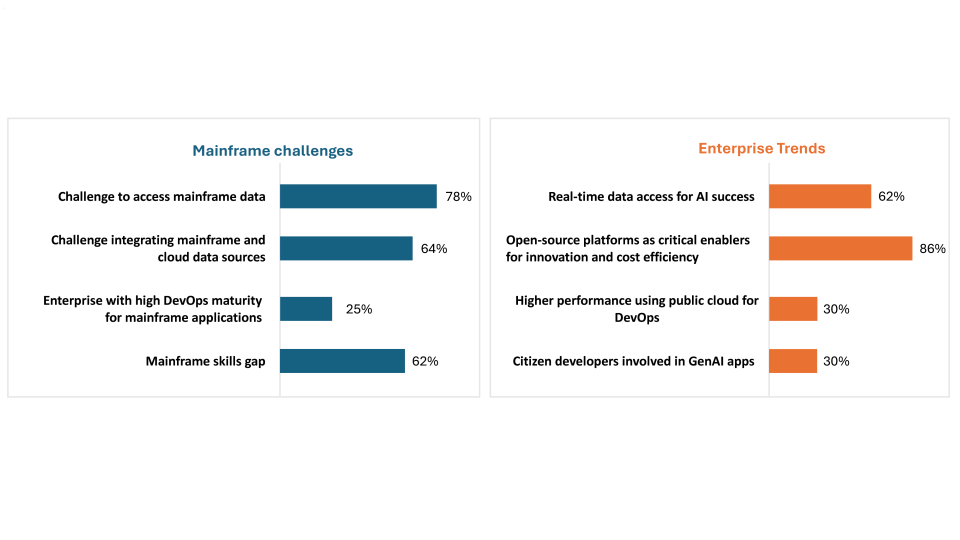
Figure 1
Divergence in trends, mainframe capabilities
Figure 1
Mainframe-centric architecture also limits the gains such as intelligent automation, advanced analytics, and personalised experiences that artificial intelligence (AI)-driven solutions offer. A shortage of professionals versed in both mainframe and AI technologies exacerbates the challenge.
Procedural past
Mainframes have long been the backbone of the IT infrastructure for diverse industries such as financial services, insurance, retail, and healthcare.
Renowned for robustness and reliability, mainframe platforms support critical processing such as insurance policy administration, ATM transactions, logistics, and public services. However, several patterns now constrain agility (see Figure 2): Batch-oriented processing and stability favour scheduled, file-based workloads and fixed release cadences. Procedural processing with codified rules in legacy languages like COBOL remains common. Rigid data structures and persistent stores based on fixed schemas and proprietary databases such as VSAM and IBM IMS further limit flexibility. Siloed and closed system architecture restrict interoperability and often require proprietary tooling and specialised skills.
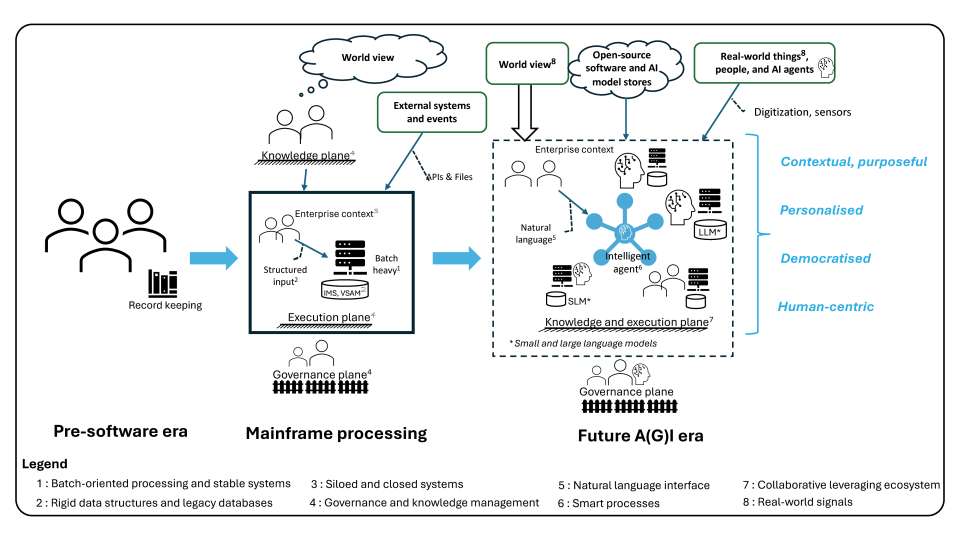
Figure 2
Evolution of business systems
Figure 2
Governance and knowledge management concentrate decision-making with domain experts and executive oversight, while knowledge frequently resides in code rather than current documentation. Additional pressures include limited availability for COBOL skills, Moreover, architecture and integration constraints mean that real‑time access to critical data is feasible but complex, typically requiring specialised middleware (for example, CICS, IBM MQ, or z/OS Connect).
Future state
Generative AI (GenAI) brings natural-language and multimodal capabilities.
These capabilities can reshape how enterprises interact with customers, partners, and internal systems. Natural language-driven immersive experiences can enable conversational interfaces that can reduce bespoke transformations in user‑facing interactions. Smart processes, dynamic orchestration and behavioural systems use AI agents powered by small and large language models to coordinate tasks, learn from behavioural signals, and support decision-making under human oversight. Breaking down silos in a hyperconnected world fosters near-real-time collaboration across enterprise boundaries, while leveraging real-world signals allows applications to ingest continuous events and adjust their behaviour dynamically.
GenAI can assist code generation and review, helping to address skills shortages and improve alignment between implementations and stated requirements. It can help build granular knowledge bases, reduce manual data processing by reimagining workflows as human-agent collaboration, broaden ecosystems through open innovation in cloud and distributed computing, and elevate architecture and integration by exposing AI as services within and beyond the enterprise, including to regulators. Broader implications include greater personalisation, support for sustainability goals, and improved digital resilience (for example through alignment with the EU Digital Operational Resilience Act (DORA) framework).
Illustrative example: Evolving account transfers with GenAI
Consider the critical core process of account transfers, which involves managing debit and credit transfers in a coordinated manner.
Today, enhancing this process with additional context—such as applying transfer charges based on transaction context or assisting customers in selecting optimal accounts and dates for transfers— typically requires lengthy project timelines, significant manual effort, and tight integration with systems of engagement (SoEs) and systems of insight (SoIs) (see Figure 3).
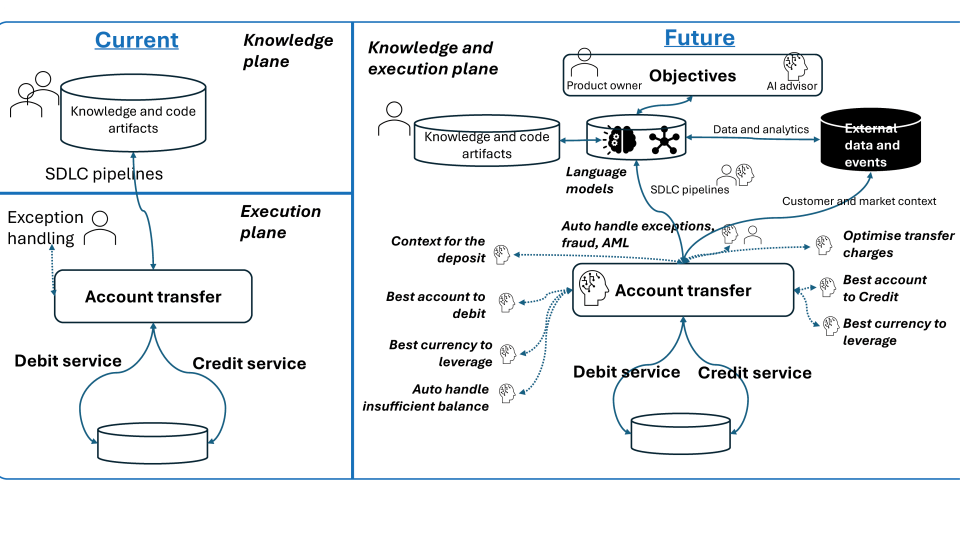
Figure 3
Reimagined critical business process
Figure 3
Future transformation with GenAI
Leveraging an agentic AI framework (for example, AutoGen or LangGraph), an AI process framework builder such as Semantic Kernel or LlamaIndex, and large language model (LLM) services from various providers, the process can be reimagined as a set of smart activities orchestrated by designated agents. These agents can:
- Personalise transfers:
- Automatically apply transfer charges based on transaction contexts, such as transfer amount, frequency, or customer profile, in line with pricing policies and regulatory constraints.
- Aid in decision-making:
- Help customers select the most suitable accounts or instruments for transfers by analysing historical data and predicting the best calendar dates for transfer.
- Integrate seamlessly:
- Coordinate with other agents managing customer engagement and analytics to achieve purposeful outcome based on user intent.
Similarly, critical business functions in other industries—such as purpose-built products in insurance, personalised travel planning, and contextual processes in manufacturing—can also be reimagined and transformed by leveraging GenAI capabilities.
The way forward
In theory, intelligent agents can automate a significant portion of routine tasks.
This requires sufficient high‑quality data and appropriate controls, with humans increasingly focussing on guidance, supervision and higher‑value decision‑making. To move towards this vision, data from key activities, interactions and decisions across the value chain must be curated and made accessible to AI systems, both for model development where appropriate and for inference through context‑enhancement techniques such as retrieval‑augmented generation (RAG). Strong data governance and safety controls are required to meet stringent data quality and privacy obligations within the organisation and under applicable regulatory requirements.
While current LLMs have limitations (for example latency, data currency, accuracy, context length and hallucinations) and applications built upon them may not achieve full autonomy in the immediate future, the productivity gains from digital assistants that augment technologists and business users are substantial. The applications of the future will heavily rely on GenAI as a core component of both the IT infrastructure (responsible for building, managing, and enhancing systems) and enterprise application systems.
For organisations running mainframes, adopting cloud‑native architectures, including containers and serverless, would be central to modernisation. GenAI‑assisted modernisation can boost productivity and accelerate innovation, making a cloud‑first strategy compelling for experimentation, scalability, and cost-efficiency.
AI road map
An enterprise can adopt a four-phase approach that leverages GenAI as part of its mainframe modernisation road map.
The AI road map for mainframe modernisation model comprises a structured progression from isolated experimentation to building adaptive, future-ready applications (see Figure 4).
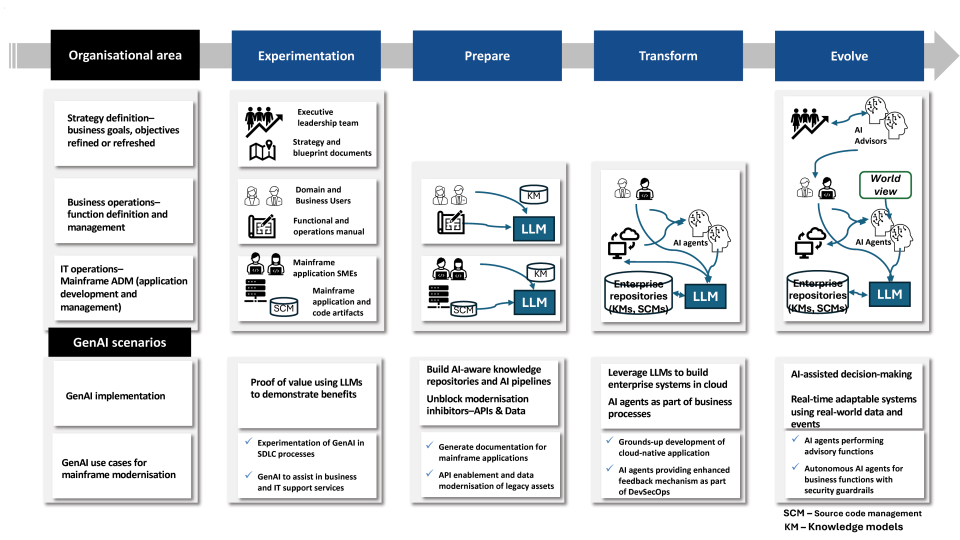
Figure 4
AI road map for mainframe modernisation
Figure 4
By advancing through these phases—experimentation, prepare, transform, and evolve—enterprises can validate use cases, integrate GenAI into core workflows, formalise knowledge-driven microservices, and ultimately deploy AI‑enabled agents that learn and improve over time through monitored feedback. This staged approach is designed to support incremental value delivery, risk mitigation and alignment with both business and technical objectives.
Phase 1 – Experimentation:
Run targeted pilots to understand benefits of using GenAI for mainframe modernisation. Potential areas include introducing GenAI into current SDLC phases and addressing specific pain points in existing IT and business processes.
Phase 2 – Prepare:
Use GenAI to generate legacy documentation from existing code and other assets to build knowledge repositories that can be queried and reasoned using AI agents (AI aware). Use GenAI to help address key modernisation challenges, such as tight coupling between applications and proprietary data and file formats.
Phase 3 – Transform:
Design target cloud applications and develop them using the knowledge repositories created in the Prepare phase, ensuring traceability between the source mainframe and the target cloud-based applications. Leverage AI agents to support business processes and provide enhanced feedback mechanisms as part of DevSecOps practices.
Phase 4 – Evolve:
Implement closed-loop feedback and governed continuous learning practices so that agents can help optimise processes using real‑world data and events, and support decision‑making in selected scenarios, within clearly defined policy, data, and security guardrails.
Incremental migration
Mainframes host some of the most critical workloads, and any migration failure can significantly impact both revenue and brand value.
GenAI-based incremental migration using existing teams but complemented with modernisation specialists offers a pragmatic approach. Start with careful planning, analysis, and design to exploit GenAI’s potential. This includes (see Figure 5):
- Blueprint application and business service boundaries, integration contracts, and success metrics
- Set up AI framework for repeatability and reuse across various legacy modernisation use cases
- Make legacy applications AI‑aware by extracting processing logic and data into a governed knowledge base that can be used for modernisation and other use cases.
- Decouple applications and services using standard interface protocols
- AI-infused selective rewrite to adopt product-centric development leveraging GenAI tooling using microservices and cloud-native platforms
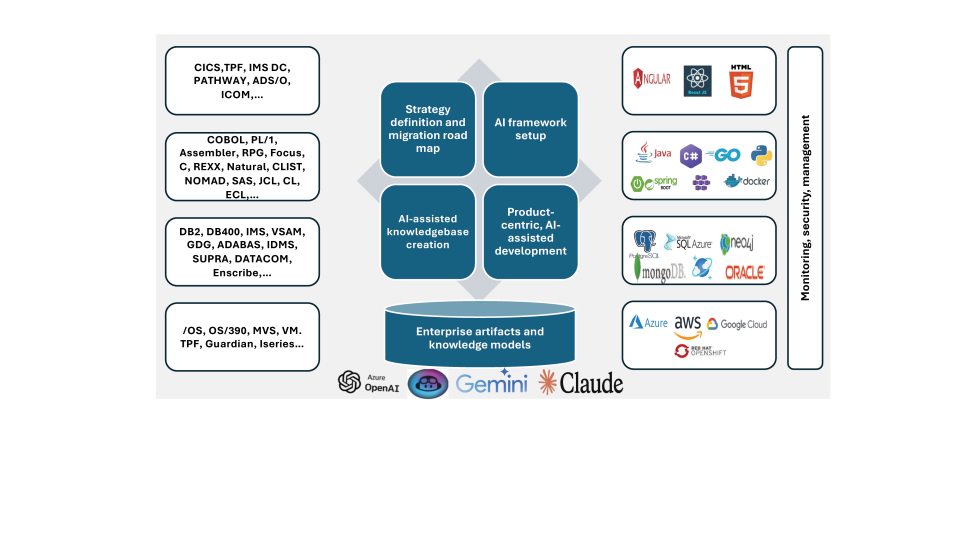
Figure 5
Framework for incremental migration
Figure 5
Evolving from legacy mainframe systems to intelligent, adaptive enterprise applications that leverage cloud‑native technologies is increasingly a strategic imperative for many organisations. By harnessing the transformative power of GenAI and cloud infrastructure, organisations can reinvent their key processes, converting legacy applications into dynamic, behaviour-aware systems that continuously adapt to evolving industry demands. As we move forward, embracing this change will be important to sustaining long‑term competitiveness and innovation.