TCS Summit Europe 2026

Recent studies have indicated that observability platforms are used to address fundamental business requirements such as proactive resilience and up-time, cost optimisation, and enhancing user experience. When systematically applied, observability can also improve an organisation’s response time to problems and optimise business operations in real time.
In the retail industry, for example, an e-commerce platform can utilise observability to track user interactions, identify bottlenecks in the purchasing process, and analyse transaction failures in real time. These insights can play a key role in ensuring the platform runs smoothly during peak shopping periods, resulting in better customer experience, optimal operational efficiency, and increased sales.
While there are many open-source and commercial off-the-shelf (COTS) products available, they often provide piecemeal solutions. This can affect application performance and compatibility, resulting in security and compliance concerns.
Additionally, licence costs and the hesitancy to deploy agents on applications to emit telemetry data pose further challenges. For instance, an enterprise service bus (ESB) tool might make agent deployment difficult due to compatibility issues and complex telemetry configuration.
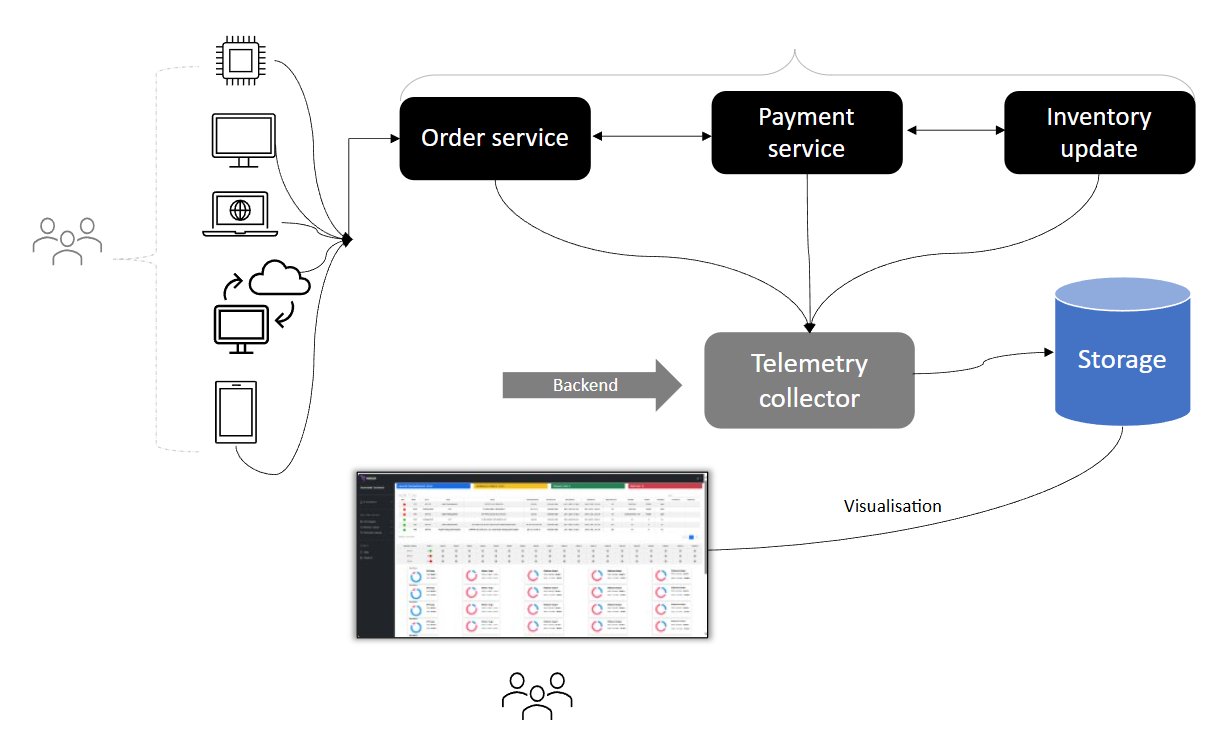
Closed loop execution points
We can help you maximize the ecosystem advantage.
Closed loop execution points
This data can then be used to monitor, troubleshoot, and improve the system. To achieve a full stack observability platform, proper planning during the design phase is imperative.
The following diagram (see Figure 1) illustrates how an enterprise-grade observability platform transforms raw telemetry into actionable insight, enabling faster decisions and resilient operations.
Integrating telemetry data collection, processing, and visualisation gives organisations valuable insights into their operations.
Systems that avoid emitting or capturing payloads during tracing better meet data storage and efficiency requirements. Trace data helps visualise the time each service takes in a transaction. This allows for easy identification of broken chains or delays.
Testing the pod
Deployment on 22nd sept
Deployment on 22nd sept
05:17 / 05:17
YOUR OPINION MATTERS
To seek information about career opportunities, which avenue would you most likely explore?
Thank you!
We have got your response