Industry
Travel and Logistics

Data and AI in Travel Industry for a Memorable Passenger Experience
Highlights
- Artificial intelligence (AI) moves decisively from experimentation to the core operating fabric of travel and logistics. Enterprises deploy AI not merely for automation, but to sense intent, orchestrate ecosystems, and drive real‑time commercial outcomes at scale.
- The industry shifts from linear, siloed journeys toward integrated ecosystems where airlines, hospitality, logistics, mobility, payments, and identity operate as a single system. Competitive advantage increasingly depends on orchestration rather than asset ownership.
- Agentic commerce moves the ‘front door’ of travel from search pages to AI‑mediated, prompt‑driven interactions, elevating the importance of answer engine optimisation (AEO) and generative engine optimisation (GEO).
- Volatility in demand, weather, geopolitics, labour, and regulation pushes enterprises to embed resilience directly into operating models using AI‑driven control towers and digital twins.
- Decentralised identity, continuous verification, and cybersecurity become foundational layers, reshaping customer relationship management (CRM), loyalty, payments, and access models.
On this page
On this pageinpage
The industry landscape
Travel and logistics are at a structural inflection point.
Demand remains resilient, travellers are more value‑conscious and purpose‑driven. Artificial intelligence (AI)-native platforms are being built to increasingly co-exist with legacy systems to record transactions, interpret context, make decisions, and coordinate ecosystems in real time. Success increasingly depends on intelligence, adaptability, and trust rather than reach or scale.
AI‑mediated discovery fundamentally alters how demand is created and captured. With conversational planning compressing the discovery‑to‑booking funnel, answer engine optimisation (AEO) and generative engine optimization (GEO) become strategic levers, determining which brands AI agents surface, trust, and recommend. In parallel, rising cyber risk and agentic fraud elevate security to a core business capability from merely an IT function.
Airlines and airports
Airlines face strong travel intent alongside constrained discretionary spends, limiting traditional premiumisation strategies.
The response shifts toward precision—segmented, dynamically assembled offers during the early stages of travel planning, when travellers are searching, comparing, and shaping intent, enabled by offer‑and‑order architectures built on modern design principles and integrated with legacy systems as required. These architectures unify booking, loyalty, operational, and partner data to support contextual personaliszation at scale.
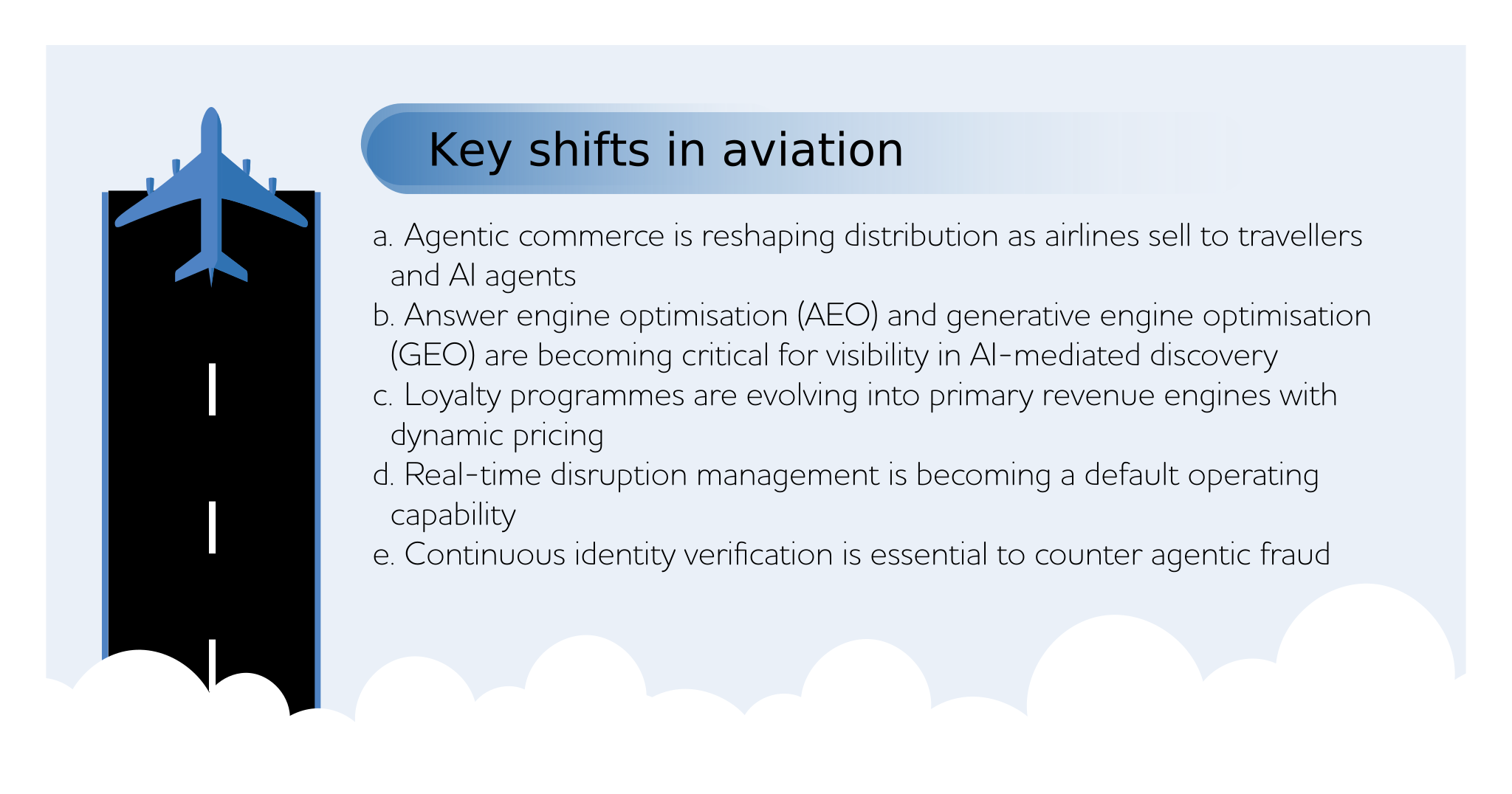
Figure 1
AI is changing aviation
Figure 1
Operationally, AI‑driven disruption management becomes foundational. Automated rebooking, compensation, and communication protect revenue while reinforcing trust during disruption. Embedded payments, payment orchestration, and behavioural risk models strengthen resilience in retailing, loyalty, and servicing ecosystems.
Hospitality
Hospitality is transitioning from room‑centric operations to software‑defined, personalised experience‑led ecosystems.
AI agents manage room assignments, housekeeping, maintenance, and demand forecasting, allowing staff to focus on high‑value guest interactions. Mobile‑first journeys, digital keys, in‑app services, and contactless payments, are baseline customer expectations.
Luxury remains resilient but is redefined around personalisation, immersion, and emotional connection rather than physical opulence. Hotels increasingly function as social, cultural, wellness, and community hubs. Unified platforms integrate property management, customer data, payments, internet of things (IoT), and identity, enabling operators to optimise total guest value while strengthening cybersecurity and data privacy.
Travel
Travel demand is becoming more purpose‑led and experience‑centric, shaped by live events, wellness, culinary immersion, cultural exploration, and set‑jetting.
AI‑assisted discovery compresses inspiration‑to‑booking cycles, shifting influence toward conversational planning and intelligent assistants.
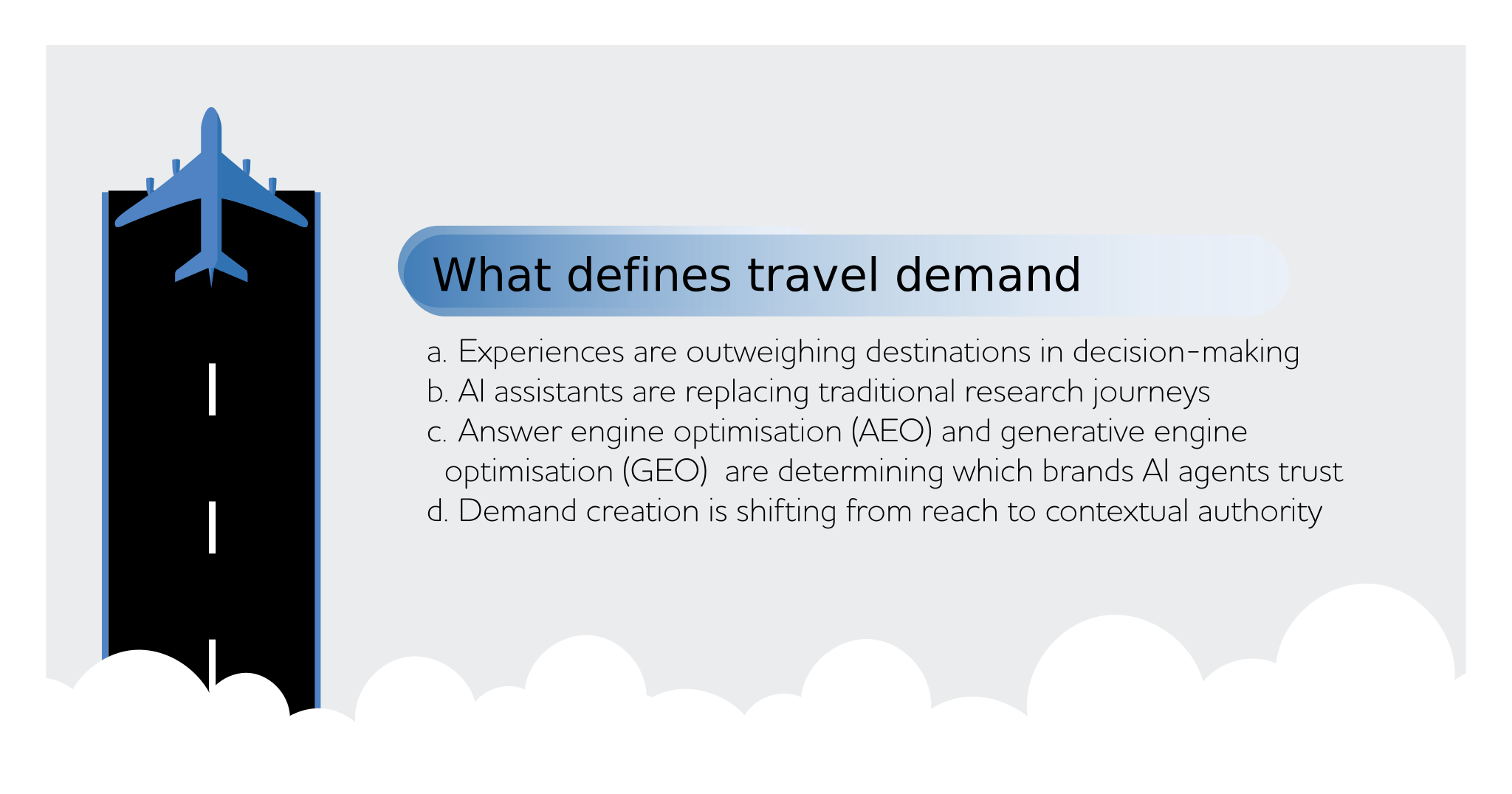
Figure 2
How travel demand is evolving
Figure 2
As ecosystems converge, airlines, hospitality, destinations, mobility, payments, and insurance increasingly operate as unified platforms. Competitive advantage depends on contextual understanding of traveller intent rather than price alone.
Transportation
Transportation systems are evolving towards multimodal orchestration and mobility‑as‑a‑service.
Digital platforms coordinate air, rail, urban transit, and emerging mobility modes into seamless door-to-door journeys, improving asset utilisation, reliability, and sustainability.
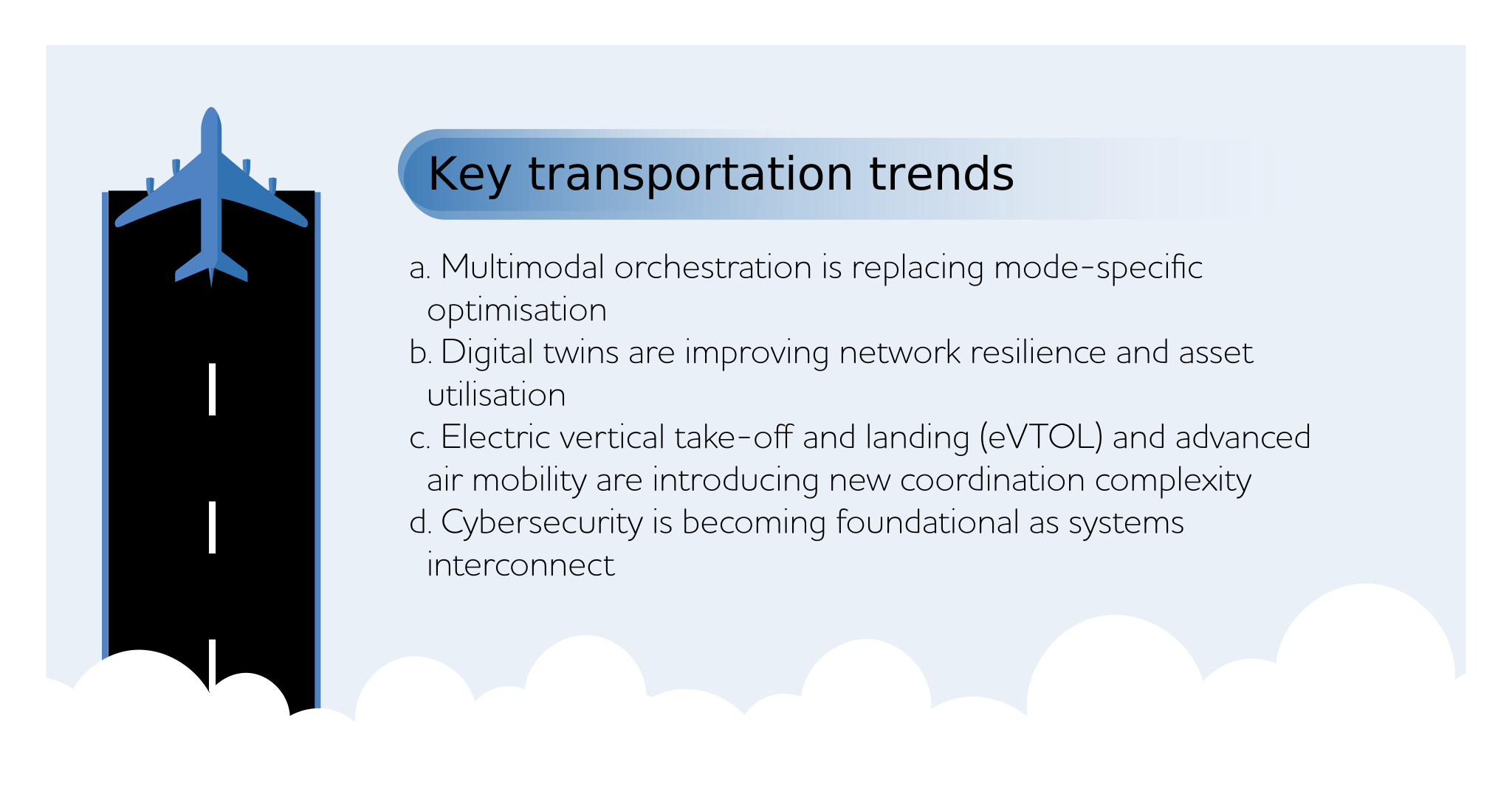
Figure 3
The road ahead for transportation
Figure 3
As transport networks digitise, zero-trust architectures and secure data exchange become prerequisites for scale and trust.
Cruising
Cruising continues to attract both older travellers and a growing base of younger and multigenerational guests.
Shorter cruises, boutique and luxury offerings, and highly personalised experiences drive growth, while cruises remain a cost‑effective option amid inflation and airfare volatility.
Technology reshapes the cruise experience through enhanced connectivity, IoT‑enabled smart ships, digital payments, and contactless processes. Sustainability investments in alternative fuels, recycling systems, and emissions transparency reinforce long‑term resilience and guest confidence.
Shipping
Global shipping operates under sustained trade volatility, regulatory pressure, and decarbonisation mandates.
Operators increasingly rely on AI‑driven planning, digital twins, and real‑time visibility to optimise fleet operations and port coordination.
Deeper integration with inland logistics and intermodal networks requires secure data exchange, cyber‑resilience, and coordinated orchestration across partners to maintain reliability and compliance.
Logistics
Logistics is being defined by structural reinvention rather than incremental change.
AI, robotics, and advanced analytics have become foundational in warehousing, planning, and last‑mile delivery, enabling speed, flexibility, and transparency at scale. The sector’s leaders are architecting truly integrated, multi-modal solutions, flexible warehousing, omnichannel fulfilment, and advanced risk management with non-negotiable focus on cost, profitability and high value deliveries.
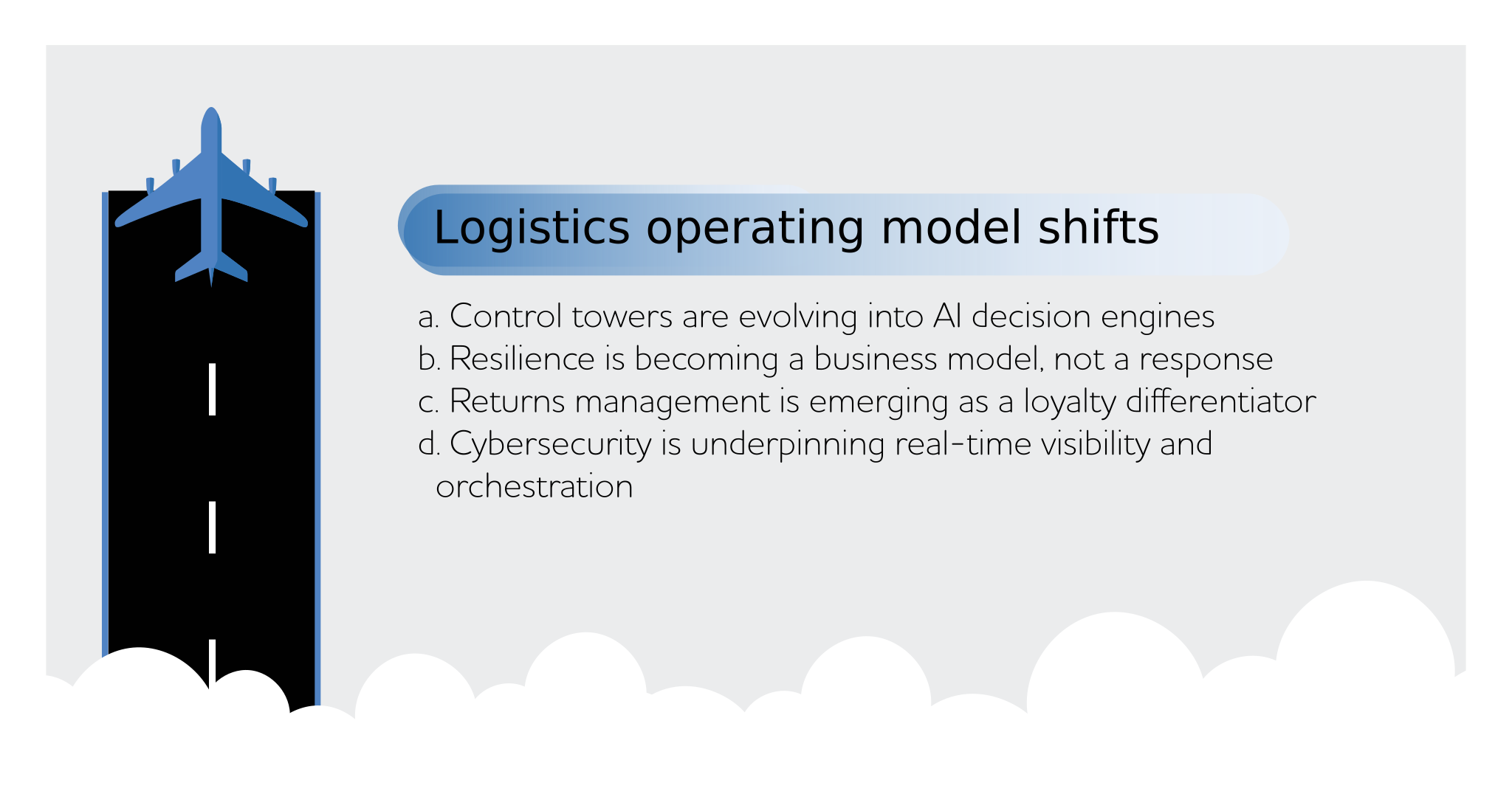
Figure 4
A new path for logistics
Figure 4
As networks digitise, zero‑trust security, secure IoT, and continuous monitoring become essential to protect continuity, customer trust, and regulatory compliance.
Railways
Railways are strengthening their position as digital backbones of sustainable and resilient supply chains, particularly across high‑density and cross‑border corridors.
Consolidation and intermodal integration enable rail to offer more customer‑centric, end‑to‑end logistics solutions.
AI‑powered analytics, predictive maintenance, digital twins, and smart infrastructure improve safety, asset utilisation, and network agility, while cybersecurity and digital identity underpin trust across multimodal ecosystems. Automation from automated yards to ‘dark terminal’ pilots is redefining operational benchmarks, and the integration of autonomous and electric vehicles is reshaping the intermodal ecosystem.
Conclusion
Enterprises no longer compete on scale or assets, but on their ability to sense intent, influence AI‑mediated discovery through AEO and GEO, make decisions in real time, and coordinate ecosystems securely and sustainably.
Organisations that embed intelligence, resilience, trust, and security into their core platforms are best positioned to protect value, build credibility, and drive long‑term growth in the next phase of global travel and logistics.
These capabilities directly result in higher revenue realisation, lower cost volatility, and reduced operational and cyber risk. They enable faster and better‑quality decisions at scale, strengthening competitiveness and long‑term enterprise value in an AI‑driven travel and logistics ecosystem.