Industry
Retail

Omnichannel CX and Intelligent Innovation – The Future of Retail
Highlights
- Retailers have heavily invested in various projects to ascertain that customer transactions are a source of enriching enterprise intelligence. However, there’s still a gap in the form of post purchase view.
- There’s no view on how the product is consumed, the rate of consumption, and when the supply runs low triggering the need for replenishment.
- High-frequency consumed retail segments, such as grocery, personal care, pet-care and household essentials can help gauge this lag for organisations who can then translate the learnings to other segments.
On this page
Post-purchase view
Retailers today know who their customers are, what they buy, where they buy and how they usually respond to promotions. Multiple investments, made over time, in point-of-sale (POS) systems, digital commerce, loyalty programs and analytics have ensured that transactions become one of the richest sources of enterprise intelligence for retailers. Yet a fundamental blind spot remains – post-purchase view. Following the purchase, a product is consumed, maintained, upgraded, and/or eventually replaced depending on the customer’s needs. Retailers often have near-zero visibility of post-purchase events and before the next purchase decision is made. This is what we identify as the retail visibility gap.
While retailers continue to collect more customer data in hopes of securing additional insights, we believe the next evolution of retail intelligence will be shaped by deriving additional understanding from the signals that retailers already have access to. We recognise this as need-intelligence, a new layer of intelligence that combines customer, transaction, product, and business-context signals to estimate the customer’s likely post-purchase situation and emerging purchase requirements.
At face value, need-intelligence might sound like another forecasting model. However, forecasting typically estimates future demand while need Intelligence estimates what is likely true now for the customer. This difference enables better merchandising, planning, customer engagement, supplier collaboration and digital commerce decisions while respecting customer’s privacy through an infer-before-you-ask approach.
Retail has become great at understanding the transaction. However, that is not where the next biggest opportunity lies. The next competitive advantage will come from understanding what happens between transactions.
Visibility gap
Securing need intelligence is a challenge for all of retail – grocers, to home improvement and everything in between. A homeowner buying a bucket of paint may be progressing on a renovation project. A customer purchasing furniture might need complementary items later. A smartphone owner might decide to upgrade. Fashion purchases move from initial excitement to regular use and eventually to a replacement. However, grocery retail offers the clearest example of need-intelligence because of the cyclical, predictable nature of the replenishment. .
For example, a customer buys a 5 kg bag of rice every month. The retailer records the product, quantity, price, location, promotion, and loyalty details in their transaction logs. This transaction record is then passed on to enterprise systems to support decisions across functions such as forecasting, performance monitoring, marketing, and promotions.
What’s outside of this view is how the product is consumed. The rate of consumption can increase (more at-home dining) or decrease (less cooking). At some point, the household will run low on supplies triggering the need for replenishment. This change is out of the preview of the grocer but anchored to the original purchase transaction.
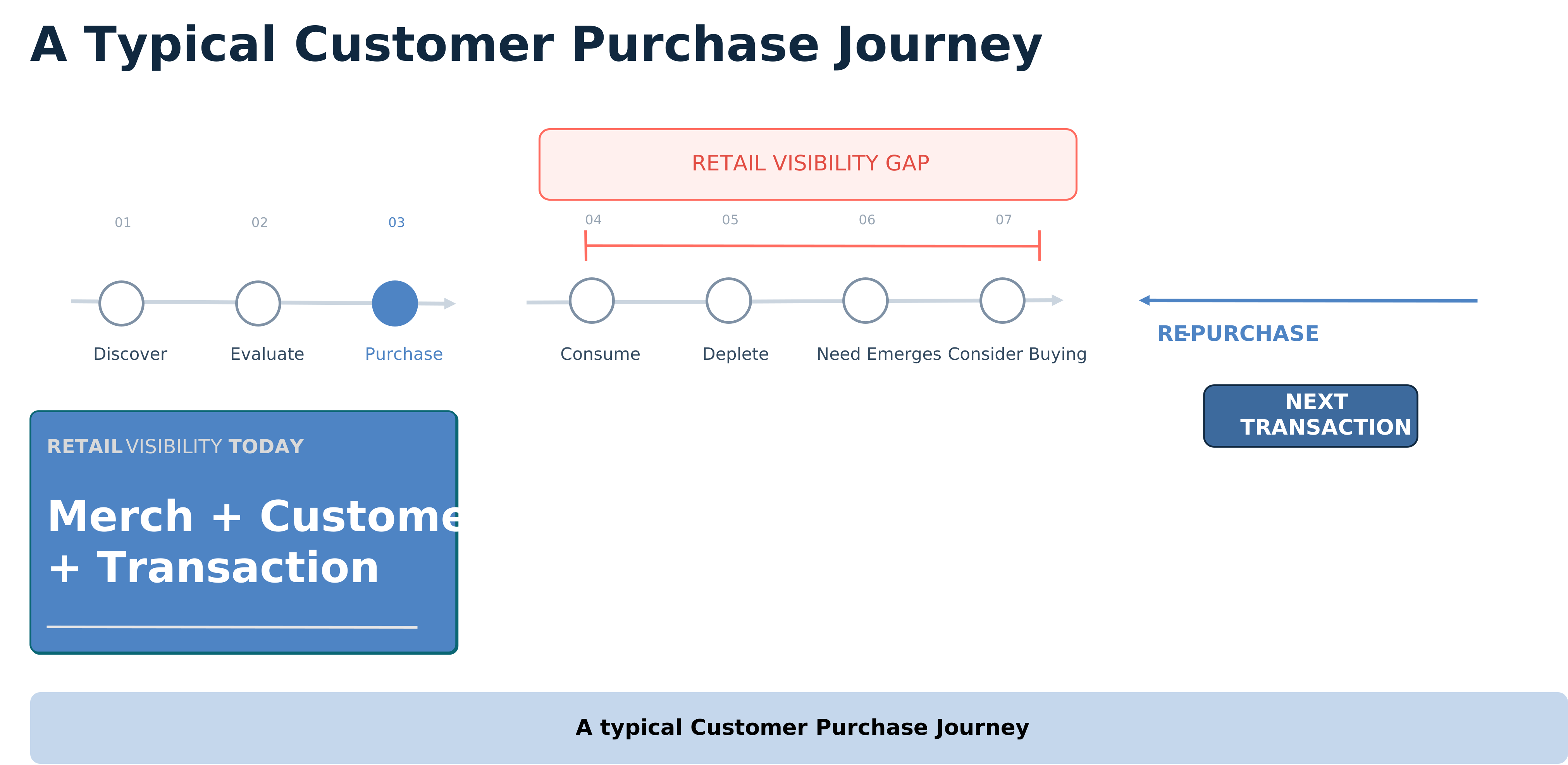
Figure 1
The Retail Visibility Gap
Figure 1
Need intelligence
Retail intelligence has evolved in distinct stages over the years. Merchandising and operational data helped retailers understand the products and the overall performance. Customer data revealed who was buying and the related demographics. Transaction data helped understand what customers are buying, when, and through what locations/channels.
Need-Intelligence derives inferences by combining product, customer, transaction and business-context signals. Individually, these signals provide only partial insight. Together, they can help estimate if the product is near depletion and/or there’s a need to repurchase.
Here’s a quick look at the ways existing retail signals can be combined to infer an emerging customer need:
Need intelligence applies this same principle at scale by combining various enterprise signals to infer customer needs and generate new decision signals for the business.
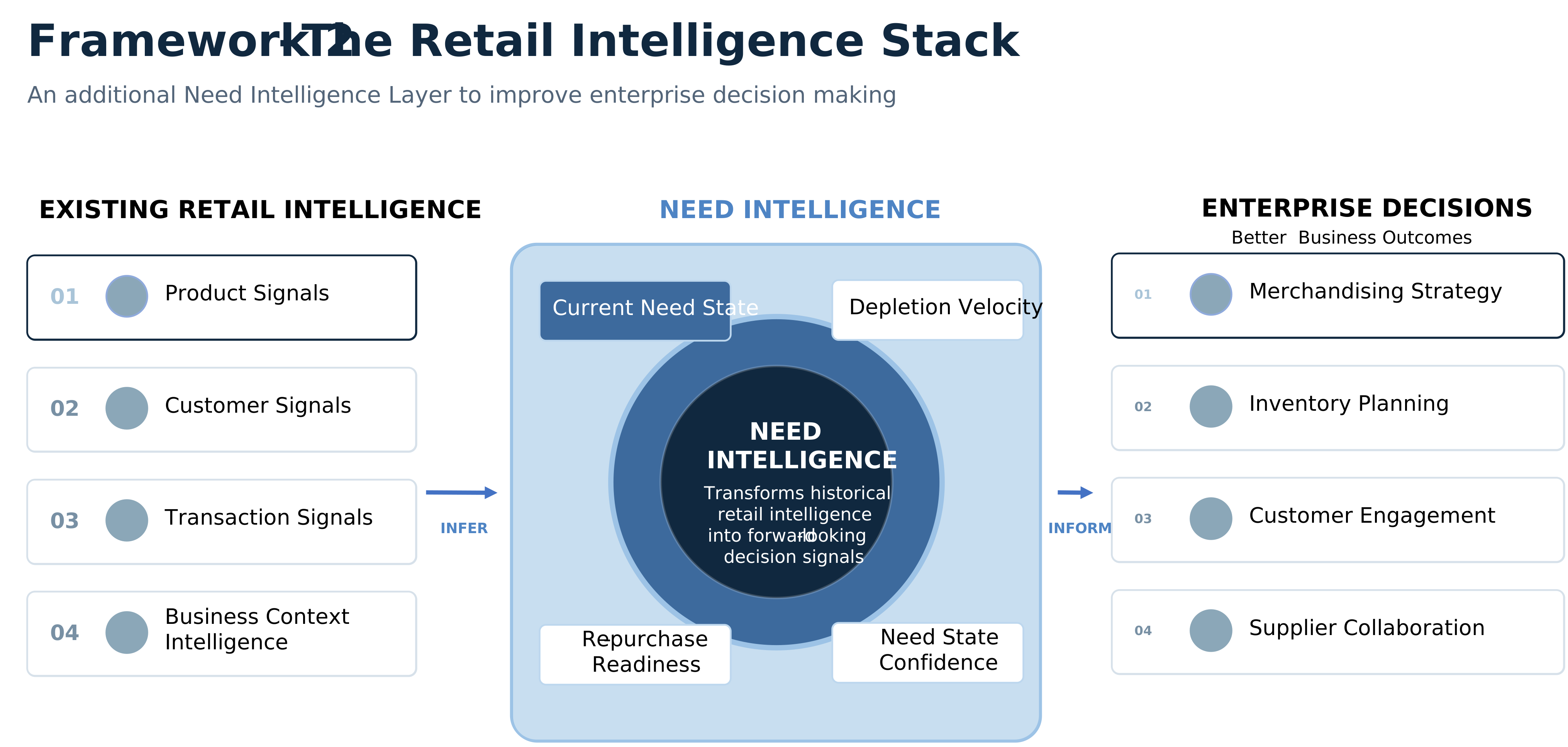
Figure 2
Extending the Retail Intelligence Stack
Figure 2
The purpose of need intelligence is not to observe or track customers after they leave the store. It is to responsibly estimate the likely needs of the customer using data that retailers already have. The guiding principle must be – infer before you ask. In essence, retailers should maximise the insights derived from existing signals before requesting additional customer information for estimating the post-purchase state. There would be no need for additional surveillance, household monitoring or intrusive data collection. Additionally, the inferences derived should remain transparent, explainable, and subject to customer preference. The goal is to estimate customer needs, not to monitor behaviour.
Better, faster decisions
Need intelligence has the potential to improve the quality of enterprise decisions across all the major enterprise domains.
From an adoption standpoint, this needs to begin where signals are the strongest. High-frequency consumables such as groceries , personal care, pet care and household essentials can be the immediate starting points. From here on, this intelligence can be expanded to project-based categories such as home improvement and finally to longer cycle categories including furniture, electronics and fashion. The strategic value of need intelligence does not lie in a single feature such as auto-populated carts but in creating a shared enterprise understanding of the customer’s ever-evolving post-purchase situation.
Despite becoming exceptionally good at understanding customers at the point of purchase, the retail visibility gap continues to exist in some form. The retailers that close this gap will not just know more about their customers, but also understand their needs before they convert into a transaction. That is the next evolution of retail intelligence.
The retail visibility gap cannot be closed by collecting more data. It can be closed by learning to derive better intelligence from data that retailers already possess.