Solution
TCS Interactive

Humanizing Technology to Create Iconic Experiences
Highlights
- Agentic AI is fundamentally transforming the shopping journey, reshaping how consumers discover, select, and purchase products. AI agents can handle everything from product search to checkout, making shopping faster and more efficient.
- However, retailers risk losing direct customer relationships and valuable data as agentic commerce bypasses their websites and intensifies competition. However, agentic AI also presents new opportunities to engage with customers, personalise experiences, and drive efficiency at scale.
- To win in this new era, brands must become agent preferred by investing in AI-driven infrastructure, trust, and discoverability. Success now depends on building robust AI and data platforms, optimising for generative AI search, and developing proprietary agents that deliver personalised, secure, and seamless experiences, both online and in-store.
On this page
On this pageinpage
AI and brand divide
It is interesting to observe how commerce is, in some ways, returning to its origins. Before the internet, transactions were conducted face-to-face, often involving direct negotiation. In today’s digital landscape, design, branding, and user experience play central roles in capturing shoppers’ attention online. We have transitioned from personal interactions to e-commerce, and now, artificial intelligence agents are taking on much of the work—sifting through countless stores, searching for the best deals, and streamlining the shopping process. However, this shift presents a significant challenge for merchants. As AI increasingly drives recommendations, customers may feel less attached to individual brands, because the experience and options may become indistinguishable from one another.
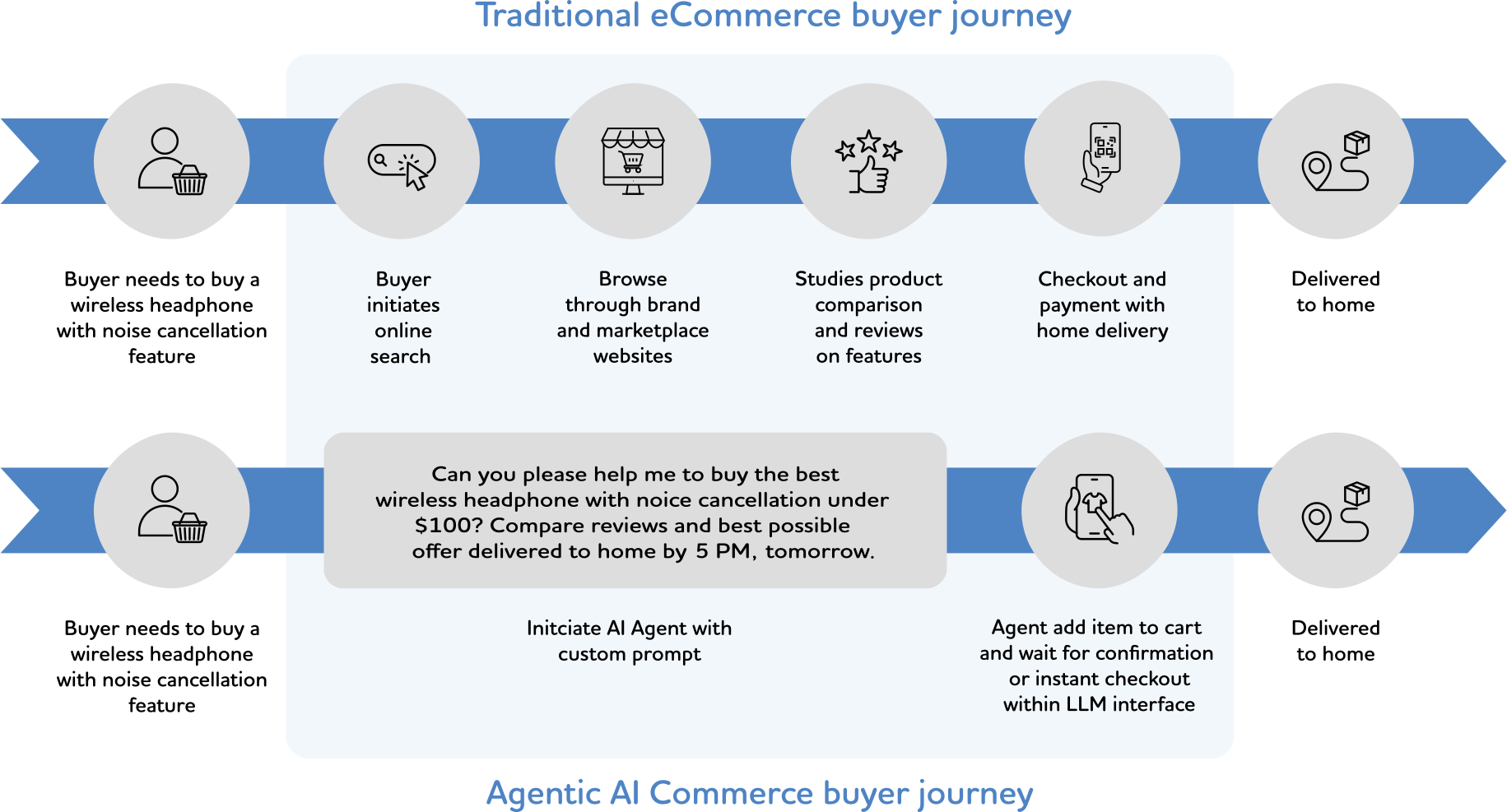
Figure 1
Traditional vs Agentic AI commerce buyer journey
Figure 1
Agentic AI commerce
AI agents conduct purchases on behalf of users, managing transactions from initiation to completion. These agents proactively assess user requirements, compare available options, and facilitate purchases with optimal efficiency. The systems operate either autonomously or semi-autonomously, guided by user instructions and necessitating minimal human intervention. Rather than engaging in traditional human browsing, they process structured data to inform decisions according to predefined criteria.
Leading AI platforms, such as Perplexity, ChatGPT, and Google, are adding robust commerce features, intensifying competition, and accelerating transformation. Recent data from Adobe highlights an exciting trend: Not only is generative AI (GenAI) traffic on the rise, but it’s also converting shoppers at a higher rate than non-AI traffic.
For example, in October 2025, visits from GenAI sources surged by 1,200% year-over-year, according to a report from Adobe that analyses U.S. commerce transactions online, covering over 1 trillion visits to U.S. retail sites, 100 million SKUs, and 18 product categories. Even more impressive, shoppers arriving from these AI-powered channels were 16% more likely to make a purchase compared to those coming from traditional sources, such as paid search, affiliates and partners, email, organic search, or social media. This marks the second consecutive month where AI-driven traffic outperformed other sources, with a 5% higher conversion rate already seen in September.
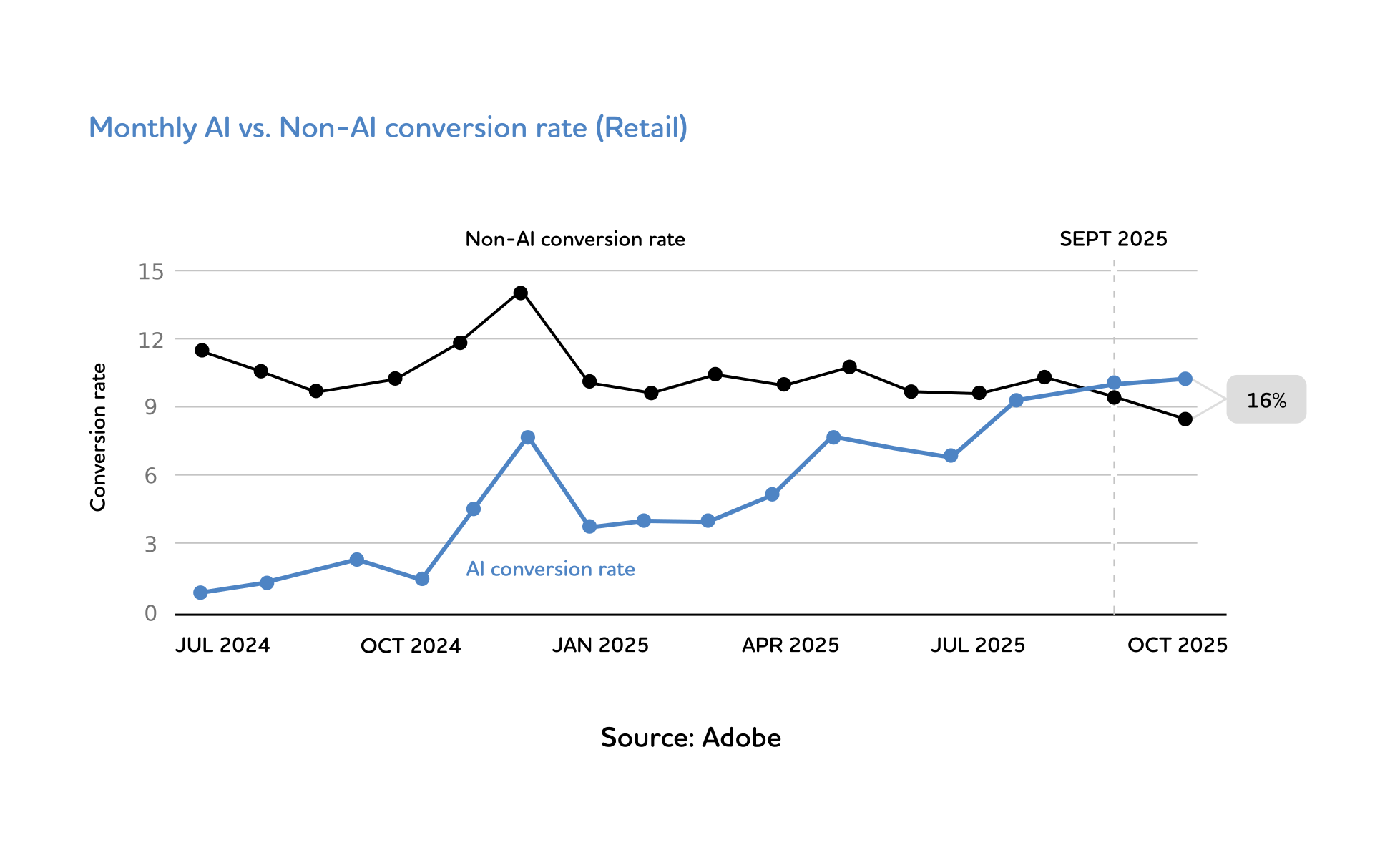
Figure 2
Monthly AI vs Non-AI conversion rate (retail)
Figure 2
Agentic risk factor
Let’s discuss the challenges that these advancements in agentic shopping pose to traditional retailers. One of the biggest risks is the risk of being sidelined. When shoppers rely on AI platforms to handle their entire purchase, the retailer’s own website can be completely bypassed.
As GenAI tools become the go-to starting point for online shopping, we’re seeing more and more consumers skip retailer sites altogether. This rise in zero-click searches and agent-driven shopping interactions means retailers are losing direct traffic, which translates to lower e-commerce revenue, along with valuable opportunities to observe, influence, and really understand consumer behaviour on a large scale.
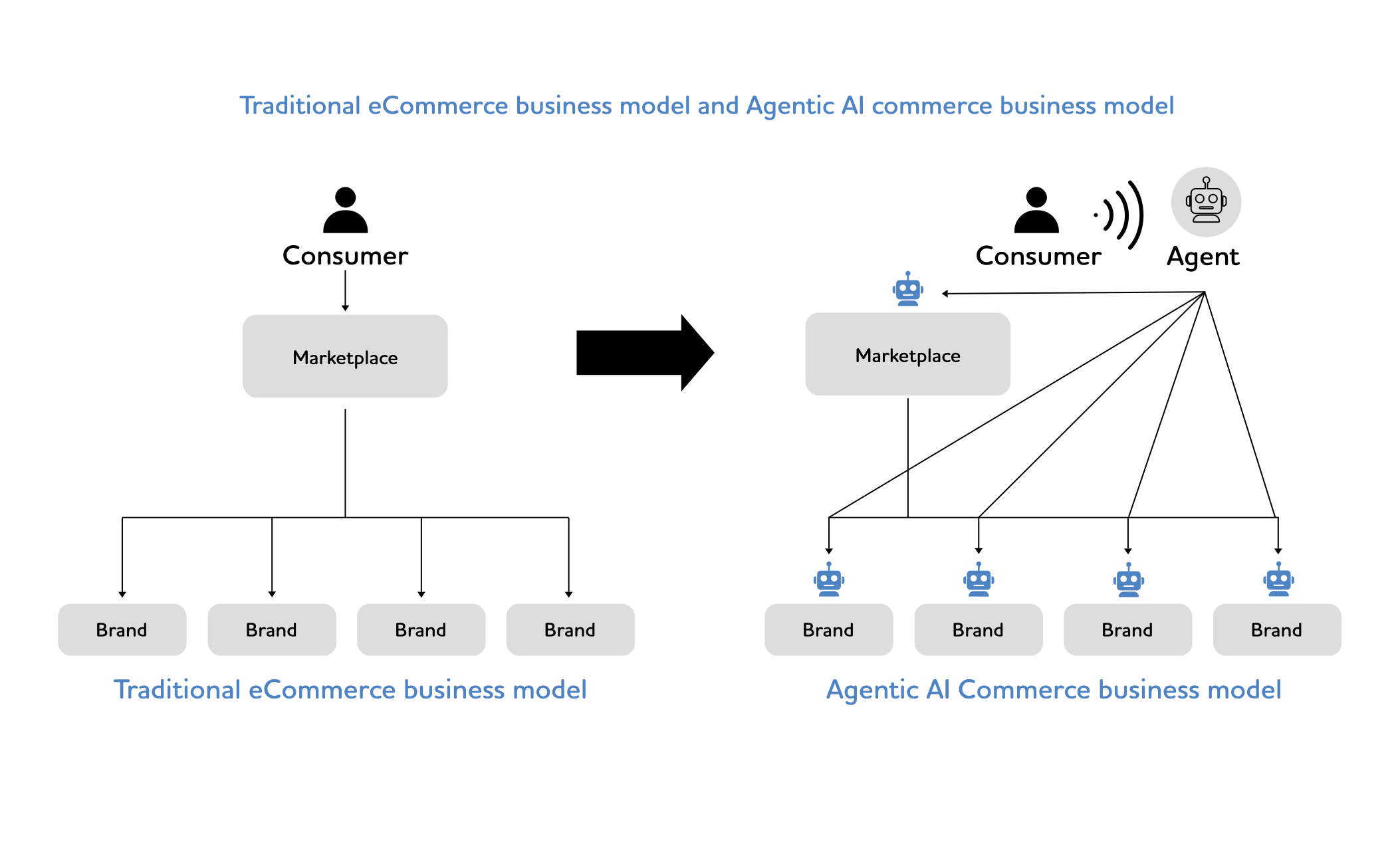
Figure 3
Traditional ecommerce business model and Agentic AI commerce business model
Figure 3
The impact on retailers could be dramatic. As a result, many are becoming increasingly dependent on GenAI search platforms to drive both traffic and sales. This shift often means higher investments in AI-driven advertising and generative experience optimisation (GXO) just to remain competitive and visible.
Another major concern is the loss of valuable insights into customer behaviour and intent. Without direct relationships with shoppers, retailers struggle to personalise experiences and effectively monetise their data. At the same time, as AI agents effortlessly compare products side by side, brand loyalty may weaken. Retailers find themselves grappling with even fiercer competition around product pricing, delivery speed, and user reviews—areas where differentiation is critical.
Additionally, the streamlined nature of AI-powered shopping can negatively affect cross-selling opportunities. Bots tend to focus on single-item purchases, which can lead to a decline in average order value and put pressure on profit margins.
Lastly, with less direct site traffic, retailers risk losing out on high-margin retail media revenue, diminishing their ability to reinvest in other areas of the business. The retail landscape is shifting rapidly, and staying ahead will require new strategies and a willingness to adapt.
Agent preferred
Let’s take a closer look at some of the key ways agentic commerce is reshaping business value by reimagining customer journeys. I’ll walk you through each area, highlighting how AI agents can make a tangible difference, for both brands and their customers.
Customer engagement and product discovery
Imagine this: Instead of generic browsing, AI agents can quickly identify what a shopper wants and requests personalised product selections directly from a brand or commerce platform. In some scenarios, your agent can even communicate with the brand’s own agent, sharing your preferences to fine-tune recommendations. Going a step further, broker agents can compare products, availability, and terms across multiple retailers—then present the best picks tailored just for you. This approach streamlines discovery while putting relevant options front and center.
Client loyalty
When it comes to building loyalty, AI agents are game changers. They can track your purchase history, preferences, and even upcoming events, ensuring that brands reach out with timely and relevant offers. Agents can negotiate perks or loyalty upgrades based on your behavior and eligibility, making the experience more rewarding. Broker agents aggregate your loyalty status across different brands, reallocating points or perks to help you get the most value. No more juggling multiple programs.
Payments and fraud detection
Handling payments is smoother and safer with agentic commerce. Your agent can authenticate and authorise purchases on your behalf, seamlessly integrating with merchant systems while enforcing your consent and spend limits. On the backend, agents verify each other’s identities using cryptographic tools or identity tokens, enabling real-time fraud detection. Broker agents further enhance security by managing settlements and risk across different platforms, leveraging advanced authorisation and federated fraud intelligence.
Core commerce platforms
AI agents are bringing more autonomy to shopping. They search, filter, and transact on your behalf whenever retailers provide the right APIs. Customer agents send structured requests, validate parameters, and complete purchases—all without manual intervention. Broker agents route these requests across various commerce systems, optimising for availability, delivery times, and costs, ensuring you always get the best deal.
In-store point of service
Agentic commerce isn’t just online—it’s transforming in-store experiences too. Agents can guide you through stores with real-time navigation based on your shopping goals, active promotions, and past behavior. They exchange contextual information like your intent and loyalty status with store systems to personalise service. Broker agents keep everything connected, reserving items, syncing your cart across devices, and managing seamless handoffs between channels.
Retailers are increasingly using agentic AI to enhance shopping experiences. At Macy’s, shoppers can use an AI-powered app to chat with a virtual assistant for directions to specific items or to check if products are in stock. Lowe’s employs autonomous robots in-store that guide customers to products and answer questions using natural language processing, making navigation and product discovery easier. Sephora offers smart mirrors and tablets that act as AI beauty consultants, recommending products and virtually showing how makeup looks based on a shopper’s skin tone and purchase history.
Retailers are also leveraging AI agents for dynamic, personalised promotions triggered by a shopper’s location and behaviour, and to anticipate the needs of high-value customers—alerting sales associates to prepare curated selections in advance. Behind the scenes, AI supports inventory management, dynamic pricing, and predictive maintenance. For example, Walmart utilises computer vision to detect low stock, automatically triggering staff alerts or reorders without requiring human intervention.
Fulfillment and returns
From checkout to post-purchase, AI agents make fulfillment and returns hassle-free. They select delivery options that match your urgency, sustainability concerns, or bundling preferences. If you need to return or exchange an item, the agent handles it in accordance with the relevant policies and procedures. Broker agents coordinate across multiple providers, balancing speed, cost, and environmental impact to efficiently manage all post-purchase flows.
Multi-layered trust
Let’s talk about trust in agentic commerce—
It's a layered concept with five key dimensions that really matter.
KYA
First, you want to know your agent (KYA), just like you’d verify a person’s identity. Agents should have passports or certificates issued by reliable authorities, and for anything sensitive, multi-factor authorisation is mandatory. Every transaction should be logged for both users and regulators, ensuring transparency and accountability.
Empathy at the core
Humans always sit at the centre of the experience. Preferences are personalised and under your control, with options for you to step in and override critical choices. Interfaces need to be intuitive, making it easy for you to stay in control. Agents also build emotional trust by maintaining a consistent tone, demonstrating empathy in communication, and adhering to ethical standards.
Transparency
Transparency is another cornerstone. You should always get clear explanations for product recommendations, see price comparisons, availability, and alternatives for validation, and know which actions were autonomous and which were confirmed by you. Any limitations, like only being able to compare certain vendors, should be openly disclosed.
Data security
Data security is non-negotiable. Agents use end-to-end encryption for sensitive data, limit sharing, and store only what's truly necessary. Regular security testing and adherence to global standards such as GDPR and ISO 27001 help keep everyone’s data safe.
Governance
Responsible governance rounds things out. Accountability for agent errors is well defined, and agents follow regulations covering consumer protection and fair competition. Plus, clear conflict resolution policies, whether for refunds, returns, or misrepresentation, ensure fairness for all parties involved.
Investment priorities
Let’s talk about what it takes for retailers to truly stand out as agent-preferred brands in this new AI-powered era. First, you need a solid foundation of activities that enable agent preferred status (see the section 'Agent Preferred') to facilitate scalable AI integration and maintain secure, seamless operations. Imagine your store’s digital backbone as a high-speed highway, designed for both reliability and flexibility. The backbone should be built on a foundation of AI and data platforms and reinforced by analytics, governance, a skilled workforce, third-party agents, and visibility.
- AI and data platforms- To make this work, retailers must build a data infrastructure that’s not just robust but also agile.
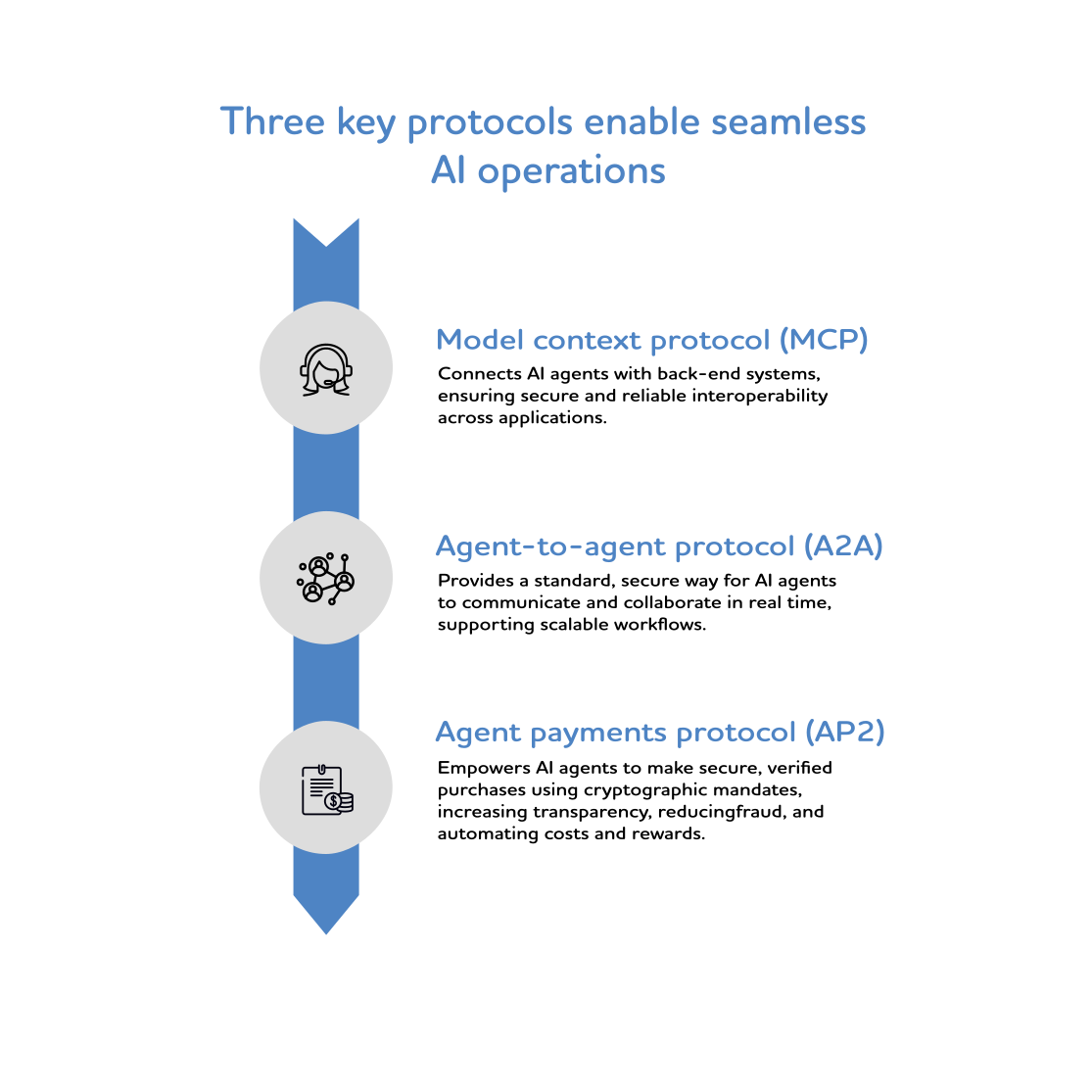
Figure 4
Three key protocols enable seamless AI operations
Figure 4
Now, let’s turn to personalisation. Adaptive AI is shifting the game by understanding user intent through remembered preferences and past interactions. This enables real-time recommendations that adjust as your context changes, making shopping experiences feel more personal and relevant than ever.
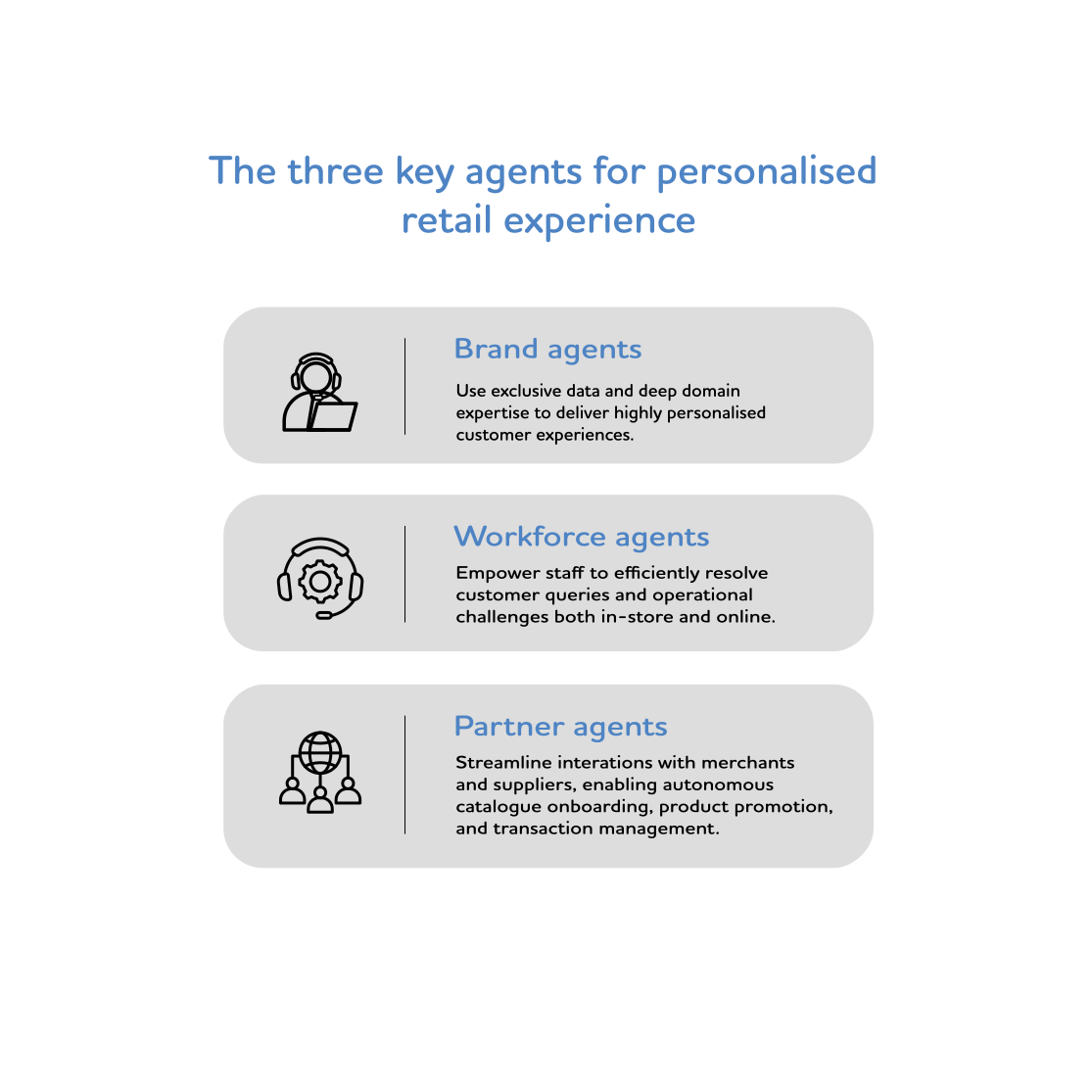
Figure 5
Three key agents for personalised retail experience
Figure 5
- Third-party agents and discoverability- Third-party AI agents are gaining traction, so retailers must enhance their organic visibility and utilise new paid channels to remain competitive. This means being discoverable in the places where customers and their agents are searching.
Earned visibility: GXO
SEO is evolving into GXO, which focuses on optimising content for AI-driven interactions. Retailers should invest in AI-ready content operations, but structured content alone isn’t enough. Generative engines value insights from social and community platforms, so building a broad digital presence is key. Ultimately, GXO means preparing for AI-driven responses, recommendations, and transactions as technology moves toward decision-making platforms.
Paid visibility: The future of generative media
As GXO takes off, generative paid media is emerging—although it’s still in the early stages. Formats like Google’s AI Max, Perplexity’s sponsored questions, and Grok’s in-chat ads hint at the future. Expect to see more sophisticated conversational ads, sponsored responses, integrated product recommendations, and transactional prompts woven into customer dialogues. These context-sensitive, intent-driven ads will transform marketing, shifting the focus from clicks to deeper engagement metrics, such as interaction summaries and intent graphs, that reveal real consumer behaviour.
- Creating retailer-owned agentic experiences- Ultimately, retailers can differentiate themselves by developing their own proprietary AI agents. There are three main types:
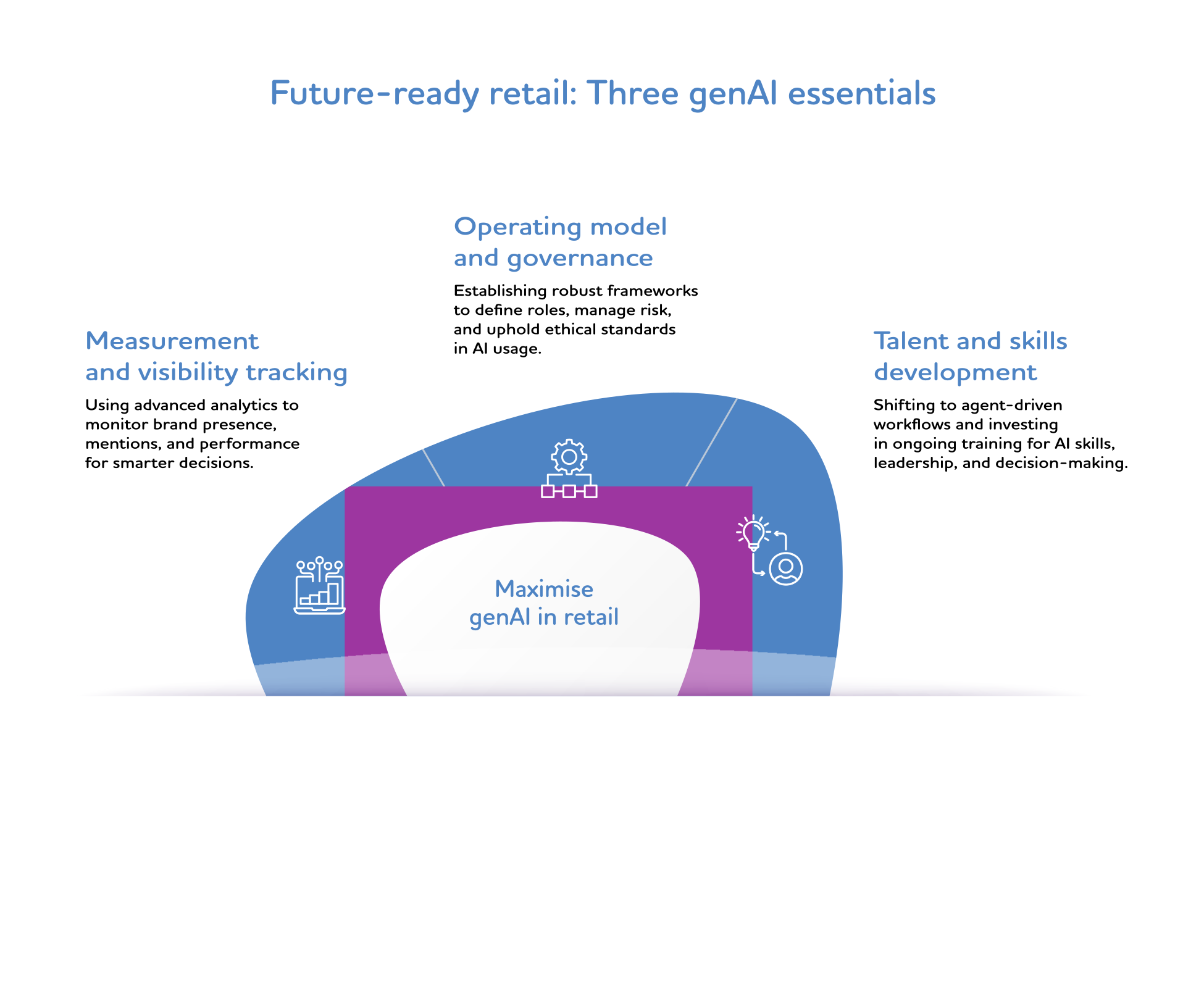
Figure 6
The infographic highlights three essential areas that retailers should prioritise when adopting Generative AI (GenAI)
Figure 6
By investing in these areas, retailers can build a future-ready, agentic ecosystem that delivers exceptional experiences for both customers and partners, ensuring they stay ahead in the evolving world of commerce.