Industry
Retail

Omnichannel CX and Intelligent Innovation – The Future of Retail
HIGHLIGHTS
- Trade in models are evolving from sustainability initiatives into powerful drivers of circular economy growth, enabling retailers to monetise returns, reduce costs, and unlock high margin resale opportunities.
- By integrating AI‑powered pricing, intelligent diagnostics, and reverse supply chain transformation, retailers can improve inventory utilisation, reduce operational complexity, and scale tech‑enabled trade‑in ecosystems profitably.
- Trade‑in programs enhance customer retention, CLV, and omnichannel engagement. Still true differentiation lies in scaling them effectively through the right balance of technology and operational excellence, turning ESG initiatives into long‑term business value.
On this page
On this pageinpage
Trade-In overview
Retail is pivoting from a wasteful linear business model to a circular economy model. Re-commerce marketplaces are platforms that facilitate reselling, refurbishment, or trade-in programs. Driven by a 16.8% CAGR, trade-in programs are now an indispensable business strategy capable of extending product lifecycles and reducing waste; they have moved beyond being a peripheral sustainability initiative. Modern consumers, predominantly Gen Z and Millennials, are shifting the trade-in demand landscape by making trade-in capability as criterion rather than a premium additional service, seeking to offset inflation and tariff shocks attached to new goods through the residual value of their existing products. This shift is further bolstered by stringent global government regulations, such as the EU’s Digital Product Passport and expanded producer responsibility (EPR) mandates, which penalise waste and incentivise resource recovery.
According to the TCS Global Retail Outlook survey, this shift is aligned with broader industry priorities, where retailers are increasingly focused on driving profitable growth, improving customer loyalty, and building supply chain resilience.
However, while these priorities are clear, many retailers remain misaligned in how to achieve them, especially when integrating new models like trade-in into existing operations.
From a business and customers’ holistic point of view, there are couple of hypotheses or questions that need to be addressed:
- Hypothesis 1: Is the trade-in business model sustainable?
- Hypothesis 2: Will this business model help the customers in terms of loyalty?
- Hypothesis 3: Will technology intervention help, or should operational efficiency be at the helm?
As third‑party resale competition grows, brands must internalise trade‑in to protect margins, retain customers, and capture recommerce growth. Success depends on tech‑enabled pricing, grading, refurbishment, and reverse logistics. With the market projected to move towards $400B+ opportunity by 2030, mastering the reverse supply chain becomes critical to turning trade-in and pre‑owned goods into profitable, sustainable growth streams.
Recovery to revenue: the financial and sustainable impact of circular models
The operational backbone of a successful trade-in ecosystem lies in the seamless integration of reverse logistics and re-commerce workflows. While the trade-in act initiates the journey, reverse logistics manages the complex operational aspects of moving used goods from consumers’ hands through specialised inspection, grading, and refurbishing hubs. This back-end efficiency is what transforms a potential liability into a liquid asset.
By synchronising the physical movement of goods with secondary-market sales, retailers are capturing a "circular premium" that directly bolsters the bottom line while fulfilling rigorous sustainability reporting requirements.
From a financial perspective, these programs significantly reduce the Cost of Goods Sold (COGS) by sourcing "inventory" through trade-ins at a fraction of manufacturing costs, often yielding gross margins 20–40% higher than new product lines.
This reflects a broader industry shift in which profitable growth is increasingly driven by intelligent operations, better inventory utilisation, and new revenue models rather than traditional sales expansion.
Simultaneously, these initiatives provide the verifiable data needed for Scope 3 emissions reporting and waste diversion metrics. For instance, by calculating the "carbon avoided" through product life extension, retailers can report tangible progress toward Net Zero goals, turning environmental stewardship into a quantifiable asset for investors.
| Sub-Segment Use Case | Business Impact | Financial KPI | ESG Metric |
| Consumer electronics asset recovery | A major smartphone manufacturer utilised integrated reverse flows to automate the grading of 5 million+ annual trade-ins. | Achieved a 25% increase in Average Selling Price (ASP) for refurbished units compared to bulk liquidation. | Diverted 1,200 metric tons of e-waste from landfills, directly contributing to circularity targets in their annual ESG report. |
| Home furnishing circular hubs | A global furniture retailer transformed "as-is" sections into digitised "Circular Hubs." | Reduced total disposal and write-off costs by 35% through localised repair and rapid resale. | Increased store foot traffic by 15% among "value-conscious" demographics, creating a unique competitive differentiator in a crowded market. |
| Premium outdoor apparel life extension | A high-performance gear brand launched a branded resale platform fueled by store-credit incentives. | Captured a 3.1x increase in Customer Lifetime Value (CLV), as trade-in credits were immediately reinvested into new, full-price purchases. | Documented a 45% reduction in water and carbon footprints per garment compared to producing a virgin equivalent, fulfilling supply chain transparency requirements. |
Figure1. Trade-in business use cases with tangible and measurable impact
How technology is shaping the trade-in landscape
Technology is fundamentally transforming the retail trade-in and resale landscape, often called “re-trade” or the circular economy. This transformation involves automating valuation, authenticity verification, and seamlessly integrating these programs into omni-channel experiences.
In today’s retail world, technology has revolutionised trade-in programs. Automated valuation engines powered by AI and ML analyse real-time market demand and historical sales data to provide fair prices instantly. Diagnostic software in electronics can identify hardware failures, while high-resolution computer vision is used in fashion to grade the condition of textiles and leather. The luxury and high-end apparel segment rely on Blockchain and Digital Product Passports (DPP) to mitigate the risk of fraudulent transactions. Customers can start a trade-in on a mobile app and finish it in-store via a synced POS system, creating a seamless ‘phygital’ experience.
However, while retailers recognise the importance of AI and advanced technologies, adoption remains fragmented and often limited to isolated use cases, preventing full realisation of value.
Technology-supported trade-in programs serve as a strategic lever for business growth and brand loyalty. Retailers offering store credit or digital gift cards for used goods, tend to lock in future spending, thus, increasing Customer Lifetime Value (CLV). Across multiple retail segments, particularly high-margin electronics and home improvement categories—it is observed that trade-in credits and gift cards are instantaneously reinvested into subsequent purchases. Gift card further supports this value loop, with research data proving that more than 60% of recipients spend beyond the card balance, creating incremental revenue opportunity. For retailers, this model links product recovery, repeat purchase behaviour, and margin protection—turning trade-in from a transactional incentive into a structured retention and revenue-recapture mechanism.
This is critical, as customer experience and loyalty remain one of the top strategic priorities for retailers, yet many organisations struggle to fully leverage their existing programs for enterprise-wide impact.
This business model presents a resilient secondary supply chain when new product inventory runs low, and budget-conscious consumers prefer high-margin refurbished trade-ins as a profitable alternative. Data captured during the end-to-end trade-in process provides R&D teams with valuable product lifecycle insights to enhance product durability and future design. Beyond supporting ESG (Environmental, Social, and Governance) mandates through waste diversion and product life extension, these programs strengthen brand credibility in sustainability while enabling retailers to capture growth in the expanding recommerce market.
| Retail Segment | Tech-Driven Use Case | Business Benefit |
| Consumer Electronics | Automated Diagnostics: Apps scan internal hardware (battery, screen, CPU) to provide an instant, guaranteed quote. | High Retention: Trade-ins fund "next-gen" upgrades, keeping users in the ecosystem (e.g., Apple, Best Buy). |
| Luxury & Fashion | AI Authentication: Tools verify stitching, logos, and materials against databases to spot counterfeits. | Brand Control: Protects brand equity by keeping the secondary market authenticated and premium (e.g., Gucci, Rolex). |
| Outdoor Gear | Digital Product Passports: RFID tags track an item's repair history and origin for transparent resale. | New Revenue: Allows brands to sell the same item multiple times (e.g., Patagonia Worn Wear, The North Face). |
| Home & Furniture | Visual Search Valuation: Customers upload photos; AI identifies the model and estimates wear and tear. | Foot Traffic: Buy-back credits drive customers into physical stores to browse new collections (e.g., IKEA). |
| Automotive Retail | Predictive Analytics: Algorithms forecast future residual value based on mileage and maintenance logs. | Inventory Optimisation: Ensures a steady supply of high-quality, "certified pre-owned" vehicles for the lot. |
Figure2. Trade-in technology use cases and benefits realisation
While technology is delivering measurable trade-in value by streamlining the checkout funnel logistics, enabling on-device firmware diagnostics, and managing real-time dynamic pricing. However, fully autonomous physical grading—such as AI-led detection of micro-defects or a fully automated integrated logistics network for trade-in remains largely aspirational, still dependent on significant human intervention in the entire operational process.
From a CXO standpoint, the priority is pragmatic investment. The opportunity lies in prioritizing high-impact integrations and adopting a balanced approach to operational and technological implementations to maximize profitability while steering away from low-yield experimentation.
Adjacent trade-in strategic value-enhancing business areas
Retailers can explore adjacent business areas beyond traditional trade-in programmes to unlock new value and differentiate themselves. A Blue Ocean Strategy in retail involves moving from crowded ‘Red Oceans’ with intense price wars to untapped ‘Blue Oceans’ of market space. Technological innovation that adopts design thinking principles enables user-centric experiences, especially in trade-in and circular retail, resulting in disruptive new business models that can tap value from the larger ecosystem.
Retailers can transform from simple sellers to comprehensive platforms for their secondary market. By using AI and Digital IDs, brands can offer a seamless ‘one-click’ resale option for products already in a customer’s digital wardrobe. This ensures that the entire transaction and future credit flows remain within their ecosystem.
Retailers can offer high-value items like luxury gear or nursery furniture through subscriptions, rentals, or leases instead of single transactions. IoT and connected tags enable retailers to monitor product health and schedule maintenance, ensuring peak condition for the next user.
Retailers can create immersive ‘try-before-you-trade’ environments using Augmented Reality (AR) and visual search. For instance, customers can use AR to visualise how a ‘pre-owned’ piece of furniture would look in their home before trading in their current item.
Retailers can offer a ‘Transparency Guarantee’ using blockchain and RFID to provide customers with the full lifecycle data or an item. This appeals to the high-growth segment of eco-conscious Gen-Z consumers.
Retailers can predict when a product is nearing the end of its first life based on usage patterns, allowing them to proactively offer ‘trade-in for credit’ deals at the moment a customer is most likely to churn or need an upgrade, turning a potential loss into a guaranteed repeat purchase.
| Innovation Area | Core "Blue Ocean" Move | Strategic Business Benefit |
| Resale-as-a-Service | Creating an in-house marketplace for pre-owned goods. | Captures secondary market: Prevents revenue leakage to third-party sites like eBay or Vinted. |
| Subscription (PaaS) | Shifting from ownership to access via leasing. | Stable recurring revenue: Moves away from quarterly sales volatility to monthly predictable income. |
| Verification Tech | Using Blockchain for 100% item authenticity. | Premium brand trust: Eliminates the "counterfeit risk" hurdle, allowing for higher resale margins. |
| Circular Logistics | Building a "Reverse Logistics" network for returns/repairs. | Supply chain resilience: Reduces dependence on volatile raw material costs by "harvesting" parts from trade-ins. |
Figure3. Trade-in Innovation areas as “Blue Ocean” strategy
Though these value innovations are more from a distanct realiation perspective but the underlying frameworks hold immediate, tactical value. CXOs can use Blue Ocean frameworks not as prescriptive playbooks, but as a lens to identify new growth spaces beyond saturated markets.
In this context, the Trade‑In Transformation Radar positions trade‑in not as a discrete operational process, but as a staged transformation agenda, showing how proven technologies deliver value today, emerging capabilities create near‑term differentiation, and future circular models can evolve trade‑in into a broader lifecycle‑management engine for growth.
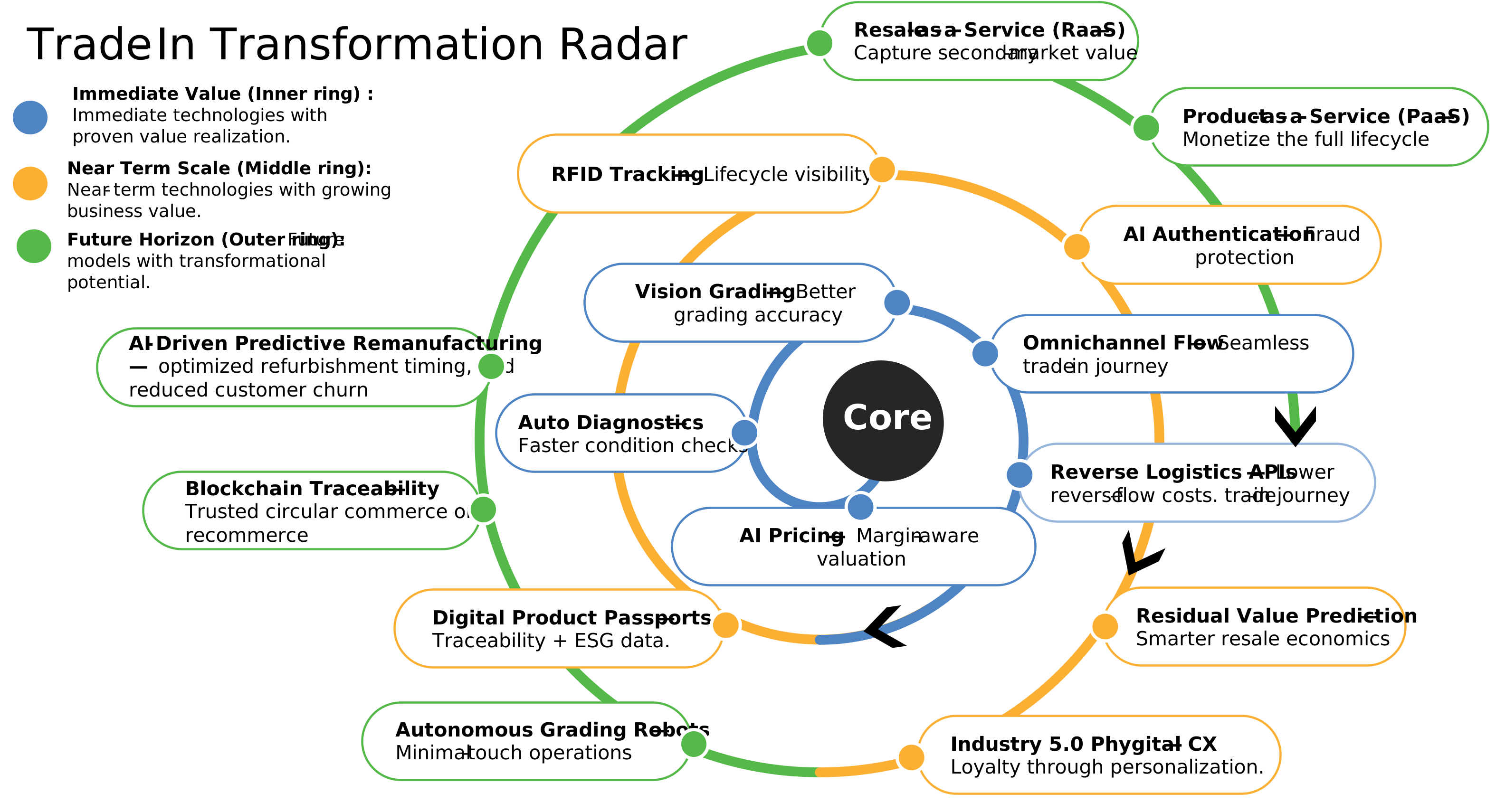
Figure 4
Trade In transformation radar: From immediate value to future circular growth models
Figure 4
How will it help retailers implement this business process with technology
Despite strong strategic intent, most retailers are still in early or developing stages of embedding agility and resilience into operations, making large-scale transformation initiatives difficult to execute.
The primary barrier to scaling trade-in programs lies in the dual challenge of reverse logistics: complexity and high cost of unit-level processing. Unlike traditional retail models, trade-in models requires handling unique, condition-variable items across multiple touchpoints, each needing individual assessment, grading, pricing, and refurbishment. This unit-level complexity elongates processing cycles and inflates operational costs, directly eroding the margins that trade-in programs aim to create.
Transitioning to tech-enabled trade-in models is a complex transformation that extends beyond tactical tech adoption. It demands a fundamental shift in the retail operating model from a variety of standpoints, as highlighted below.
| Areas | Hurdle | Evidence-based mitigation strategy |
| Business strategy | Cannibalisation Fear: Businesses fear that selling cheaper, used goods will steal sales from high-margin new products. | Data Attribution: Use pilot data to show that trade-in credits are typically spent on higher-priced new items, increasing overall "basket size." |
| Operational | Siloed Operations: Disconnect between e-commerce, store ops, and logistics makes reverse flows (returns/trade-ins) messy. | Unified P&L: Establish a dedicated "Circular Economy" unit with cross-functional KPIs. |
| Technological | Integration Debt: Legacy POS and ERP systems often cannot handle "negative transactions" (buy-backs or paying the customer). | Middleware Solutions: Implement API-first RaaS platforms that sit on top of legacy systems without requiring a total revamp. |
| Logistical | High "Reverse" Cost: The cost of shipping, repairing, and authenticating individual used items can erode all profit. | Regional Hubs: Use store locations as local "drop-off" and "processing" points to minimise long-haul shipping costs. |
| Financial | Valuation Accuracy: Risk of overpaying for damaged goods. | Deploy AI computer vision for standardised, objective condition grading. |
Figure 5. Trade-in hurdles and Evidence Based (EB) mitigation strategies
Retailers who will thrive in the coming decade will shift their perspective from viewing sales as the end of a customer relationship to seeing them as the beginning of a product’s lifecycle. Tech-enabled trade-ins turn customers’ closets into untapped value pools—transforming returns into renewed trust, used products into fresh revenue, and linear retail into a circular growth engine. The gap between ambition and execution remains the defining challenge in retail transformation—and the greatest opportunity for those who can operationalise new models at scale.