Industry
Life Sciences

Patient-centered Care Models Taking Center Stage in Life Sciences
Highlights
- Agentic AI and copilots will not transform pharma experience unless they can reason on shared scientific meaning, lineage, and context.
- Semantic debt is the hidden barrier between successful AI pilots and trusted enterprise-scale adoption in regulated environments.
- A semantic intelligence infrastructure that connects ontologies, knowledge graphs, FAIR governance and AI orchestration into a reusable foundation for decision-ready AI is the need of the hour.
On this page
Why now
Pharmaceutical organisations are no longer only experimenting with generative AI. Copilots are being introduced into laboratories, regulatory operations, quality workflows and enterprise search. Agentic AI is now being positioned to plan tasks, retrieve evidence, recommend next actions and orchestrate work across systems. Yet the expected experience transformation has not fully materialised.
Scientists still reconcile findings manually, quality teams chase context across systems, and regulatory professionals validate source evidence through fragmented documents. The reason is structural: agents can only transform work when they understand the meaning, lineage and relationships behind enterprise knowledge. Without that foundation, AI remains helpful but narrow—summarising content, answering local questions and automating isolated steps. The shift needed now is from task-level assistance to context-aware enterprise intelligence. A semantic foundation makes this shift possible by giving copilots and agents a governed layer of shared meaning to reason on.
What are the causes of the semantic bottleneck?
Life sciences companies are not short of AI ambition. What continues to limit value is more fundamental: enterprise data is rarely organised in a way that agentic systems can understand, connect or defend. Laboratory observations sit in electronic lab notebooks (ELNs) and laboratory information management systems (LIMS), analytical results in chromatography data systems [PK2.1](CDS) platforms, process context in manufacturing systems, and regulatory knowledge across submissions, documents, and local interpretations. Each environment carries its own vocabulary.
This creates the semantic bottleneck. AI can retrieve, generate and execute steps, but it cannot reliably reason when the meaning of a batch, method, material, parameter or quality attribute changes across contexts. In regulated environments, that gap matters. Outputs that cannot be traced to source data, assumptions and scientific rationale remain interesting but not decision-ready. Until meaning is connected across the enterprise, AI will improve productivity in pockets but struggle to transform the end-to-end experience.
What is the hidden barrier that hampers the scaling of AI pilots?
Most organisations recognise technical debt. Fewer name the quieter problem beneath their AI programmes: semantic debt. It accumulates when functions, sites and partners define scientific concepts differently over time. The same material may have multiple identifiers. A method may be named differently across studies. Instrument events may be captured inconsistently. Expert rationale may remain in documents, messages, slide decks or memory. AI does not remove this debt; it exposes it.
Early pilots may appear successful because they operate inside curated datasets or controlled workflows. The challenge begins when leaders ask for scale across modalities, development stages, manufacturing sites, quality systems and regulatory narratives. At that point, the question is no longer whether the model can answer. It is whether the enterprise knowledge environment is precise enough for the answer to be trusted. Semantic debt is the hidden barrier between promising pilots and enterprise-grade AI adoption.
What is the key approach to scaling AI safely in a pharma enterprise?
Semantic intelligence infrastructure provides the missing operating layer. Rather than replacing existing systems, it connects them through shared meaning. The fabric combines five capabilities:
- Scientific data foundation: Integrates data across laboratory, quality, manufacturing, clinical, and regulatory systems.
- Semantic harmonisation: Aligns data through ontologies, controlled vocabularies, metadata standards, and terminology mapping.
- Knowledge intelligence: Connects information using knowledge graphs and relationship models.
- Trust and governance: Ensures FAIR (Findability, Accessibility, Interoperability, Reuse) principles, provenance, lineage, traceability, and compliance controls.
- AI insights: Enables agentic AI, copilots, enterprise search, decision support, and workflow automation.
Together, these capabilities transform disconnected information into trusted enterprise knowledge. AI systems can then reason over relationships, not simply retrieve records. For leaders, this changes the conversation from “Which AI tool should we deploy?” to “What trusted knowledge layer will allow AI to scale safely, repeatedly and meaningfully across the enterprise?”
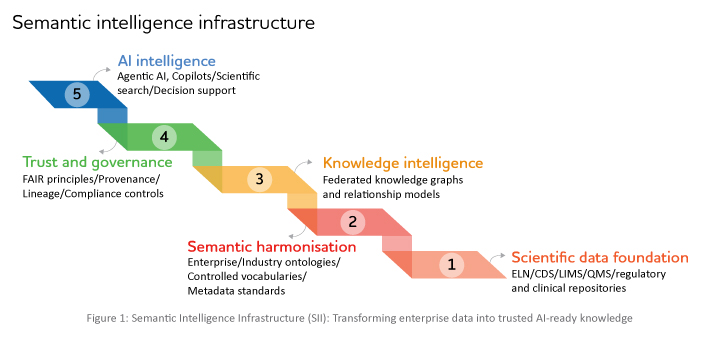
Figure 1: Semantic intelligence infrastructure
Figure 1: Semantic intelligence infrastructure
How can leaders use semantic readiness to de-risk AI investments and accelerate scale?
Many organisations assess AI readiness based on technology maturity or data availability. Neither of these confirms whether enterprise knowledge is actually usable by AI. A semantic readiness index (SRI) assesses whether scientific knowledge is connected, trusted, and consumable by intelligent agents. SRI evaluates four dimensions:
- Semantic breadth measures how widely knowledge is connected across R&D, manufacturing, quality, regulatory, and clinical operations.
- Semantic depth measures how richly knowledge is described through metadata, ontology alignment, traceability, and contextual relationships.
- Semantic trust evaluates provenance, lineage, FAIR compliance, governance, and traceability, ensuring explainable and auditable insights.
- Semantic activation measures how effective the consumption of enterprise knowledge by copilots and autonomous AI agents is in supporting decisions and executing workflows.
Overall SRI is the composite of the four dimensions (on a scale of 0-100). A higher score indicates stronger readiness for scaling agentic AI.
Organisations typically fall into four states: Siloed enterprise, connected enterprise, domain-intelligent, and semantic enterprise. The objective is to move towards the semantic enterprise quadrant, where AI systems operate with enterprise-wide context and trust. The SRI provides leaders with a practical benchmark for identifying investment priorities, reducing semantic debt, and scaling agentic AI on a trusted knowledge foundation rather than on disconnected data assets.
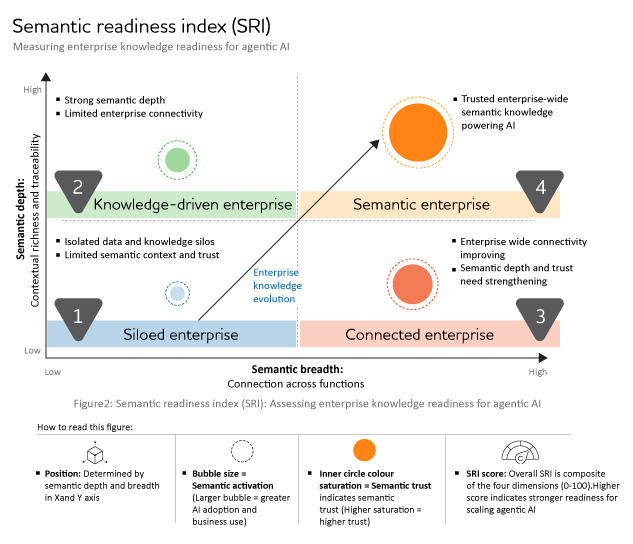
Figure 2: Semantic readiness matrix (SRI)
Figure 2: Semantic readiness matrix (SRI)
How does connected enterprise knowledge unlock enterprise-scale AI value?
As organisations build semantic maturity, intelligence begins to compound. A routine assay result in one laboratory can become more than a local observation. Once captured, the result is aligned to enterprise definitions, connected to historical research, validated through provenance, and made available to AI agents as trusted context.
A compound tested today may be linked to an abandoned study from another geography, a pathway explored by another team, or a safety signal buried in archived evidence. The value is not only in the data that is stored, but the meaning travels with it. This is the semantic avalanche: every data point has the potential to activate enterprise knowledge.
Cross-domain drug discovery acceleration through semantic knowledge activation
| What happens | Semantic avalanche effect | Value add |
| A routine screening assay on a new compound a-23 done, to see its interactivity with specific protein. Results recorded in local lab instrument | Instead of a report which captures this result, raw file is ingested by layer 1. May not mean much as of now, but the spark is lit | Eliminates data silos; ensures no experiment remains isolated, improving data availability and reuse |
| What happens | Semantic avalanche effect | Value add |
| Layer2 understands that the target protein being talked about is globally called protein-xyz. How: Enabled through a hybrid semantic framework combining industry-standard ontologies with the organisation’s proprietary definitions, protocols, and internal scientific context | It is no longer “data from the local lab”— it becomes part of a globally understood, enterprise-wide knowledge system | Enables cross-functional scientific alignment, ensuring that r&d, translational and therapeutic teams understand the same context uniformly |
| What happens | Semantic avalanche effect | Value add |
| As the compound a-23 connects into the company’s global knowledge graph — information avalanche explodes | Compound a-23 is auto-connected to a massive web of historical context. An alert flashes: “This exact compound structure matches a project abandoned in China 5 years ago ineffective against liver disease — but the biological pathway it just triggered is identical to a breakthrough your cardiovascular team in UK is desperately searching for today” | Unlocks latent enterprise knowledge, preventing duplication of experiments and accelerating discovery through reuse of prior research |
| What happens | Semantic avalanche effect | Value add |
| Layer 4 wraps protection of trust on this key business insight. It checks the pedigree of the local lab test: details that matter like Who ran it? Was the machine calibrated? Was the purity batch correct? | Information is treated as verified, gxp-compliant scientific fact. Regulators and executives now know that it is not a hallucination and they can now confidently pivot resources based on this data without risking regulatory failure | Enables gxp-compliant decision-making, reducing manual validation time and increasing regulatory confidence |
| What happens | Semantic avalanche effect | Value add |
| Agents recommend next actions and assemble evidence for human review | Ai reasons across the connected enterprise and with human in loop verification sends a message to cardiovascular research head: “Lead candidate has been found. I have compiled the 5-year-old China safety data, linked it to this morning’s local lab’s assay, verified the compliance trail, and pre-drafted the testing protocol for the team to begin next week” | Enables decision acceleration, reduced cycle times, and true experience transformation through proactive, context-aware Ai-driven actions |
Semantic intelligence infrastructure is not merely another technology layer—it is the foundational capability that transforms fragmented enterprise data into connected enterprise knowledge and connected knowledge into intelligent action. As scientific information becomes semantically enriched and contextually linked, every experiment, observation, and decision continuously strengthens the enterprise knowledge fabric, creating a compounding multiplier effect for innovation, productivity, and AI-driven discovery.
Organisations that invest in Semantic Intelligence Infrastructure today will be the ones that scale trusted AI, accelerate scientific discovery, improve R&D productivity, and define the next generation of intelligent, autonomous, and knowledge-driven enterprises.