Industry
Retail

Omnichannel CX and Intelligent Innovation – The Future of Retail
HIGHLIGHTS
- Plastic packaging in retail supply chains is known to be a major contributor to overall waste. Growing focus on sustainability in business operations means securing and using the right data spanning the supply chain processes can help identify and reduce waste.
- Acquiring data from across the retail supply chain can help gauge the volume of waste. In addition, transforming fragmented data into actionable intelligence can help retailers optimise plastic use, reduce waste, and support sustainability goals.
- There’s need for an agentic AI solution that can address gaps in plastic-related data across the retail supply chain. The AI-backed insights can enrich the dataset and help deliver more accurate plastic waste predictions.
On this page
Overview
It is no secret that plastic packaging from retail supply chains is a major contributor to overall waste volumes, not to mention its significant environmental impact. Per some reports, 10 major supermarkets in the UK alone accounted for nearly 900,000 tonnes of plastic packaging in 2019.
With growing focus on ensuring sustainability in business operations, securing and using the right data spanning the supply chain processes can help identify and subsequently cut the volume of waste. This paper proposes a hybrid system using machine learning and GenAI to estimate plastic waste across retail operations, enabling data-driven sustainability strategies.
Retailers have extensive internal data across supply chain and logistics processes, including product specifications, order volumes, packaging types, and waste metrics. However, supplier-side data is often incomplete. Using large language models (LLMs) can help generate synthetic data to fill these gaps. We believe these innovative approaches can help address the challenge of plastic waste by predicting the near-precise volume produced and subsequently reducing waste and implementing lasting sustainability practices.
We propose using generative AI, supervised machine learning algorithms (Support Vector Machine, Multi-Layer Perceptron Classifier, Decision Tree), and a Vision Language Model (VLM), leveraging data for product details, purchase orders, and manufacturing metrics. In addition, GenAI can be used to generate missing data for a better view across the supply chain.
Getting in the weeds
The first step in waste reduction will be acquiring data from across the retail supply chain, specifically purchase order and product manufacturing data. This is an important step as the data captures product details, quantities ordered, production volumes, packaging materials, wastage metrics, plastic types, and cost and colleague data from unpackaging activities.
Once all the information is secured, LLMs can be supplied with retail data to address gaps in supplier details. Three supervised models, Support Vector Machine (SVM), Multilayer Perceptron Classifier (MLPC) and Decision Tree, will then be trained on the extracted features.
Additionally, purchase orders and product manufacturing data hold valuable information for forecasting waste generation across the supply chain. Analysing these datasets can reveal the factors driving plastic waste, such as packaging material types and waste metrics at manufacturing units, warehouses, and storage units. The process can be made faster by replacing time-consuming and error prone manual analysis with machine learning algorithms.
Then there’s waste from unpacking at different spots, including suppliers, warehouses, and stores. Each step contributes differently to the overall waste generated. Our approach calculates the plastic used per product type and location, then applies machine learning to forecast waste.
Plastic types are categorised by recyclability:
- Easily recyclable: polyethylene terephthalate (PET), high-density polyethylene (HDPE), polypropylene (PP)
- Rarely recyclable: polyvinyl chloride (PVC), low density polyethylene (LDPE), linear low-density polyethylene (LLDPE) and polystyrene (PS)
The staff can dispose of packaging waste into designated bins after unpacking, while the system models use this data to estimate waste volumes.
CURRENT STATE |
STAGE |
PROPOSED ML SOLUTION |
Current State |
01 |
ML-Powered Proposal |
Current State |
02 |
ML-Powered Proposal |
Current State |
03 |
ML-Powered Proposal |
Current State |
04 |
ML-Powered Proposal |
Current State |
05 |
ML-Powered Proposal |
Current State |
06 |
ML-Powered Proposal |
Current State |
07 |
ML-Powered Proposal |
Current State |
08 |
ML-Powered Proposal |
Current State |
09 |
ML-Powered Proposal |
The nitty-gritty
n order to effectively act on the vision of waste reduction, there is a need for an agentic AI solution that can address gaps in plastic-related data across the retail supply chain. In addition, LLMs enhanced with retrieval-augmented generation (RAG) can generate context-aware estimates using product specifications, purchase orders, packaging information, and historical supply chain records, in case of missing or incomplete supplier data. The GenAI-backed insights can enrich the dataset and improve data completeness. This in turn can enable machine learning models to deliver more accurate plastic waste predictions.
Transforming the fragmented data into actionable intelligence can help retailers optimise plastic use, reduce waste, and support sustainability goals.
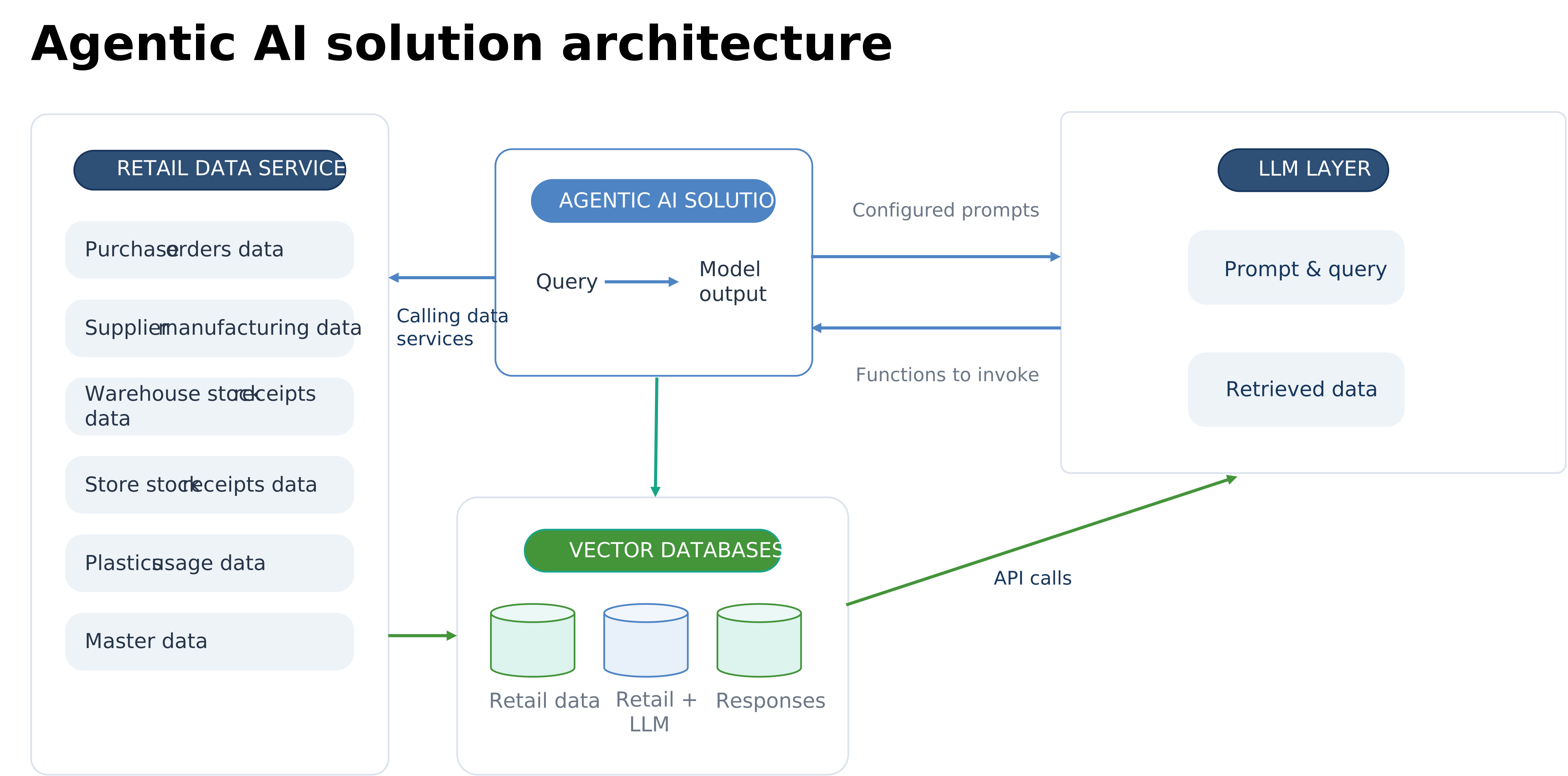
Figure 1
Innovation modelling with source and target data
Figure 1
The AI-generated data is stored alongside supplier information, which may be complete, partial or missing. In cases where supplier-provided plastic data is incomplete or unavailable, the system uses a Vision Language Model (VLM) to derive plastic attributes using package images. Once the product is unpacked at the store or depot, the image is passed to the VLM, which then identifies the plastic type, estimates plastic weight from dimensions, classifies recyclability, and determines the source of the plastic.
The values produced by the VLM are directly mapped to the existing dataset fields, eliminating the need for a schema. This gives the data generation stage a grounded observation in place of a generated value, improving the data that feeds the models. The VLM is invoked only when supplier data is missing, complementing GenAI-based gap filling without altering the pipeline.
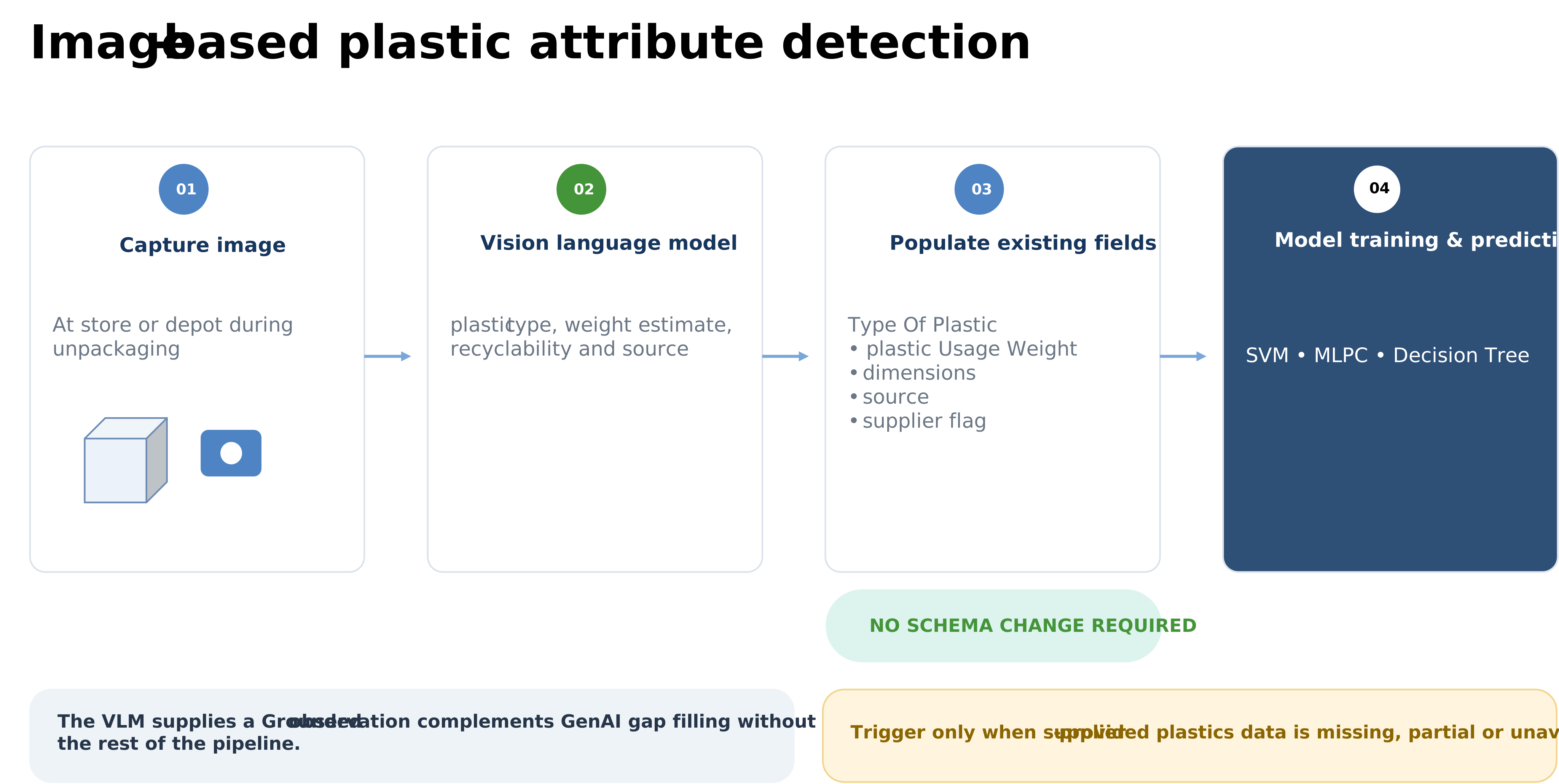
Figure 2
Image-Based Plastic Attribute Detection
Figure 2
The model collects data from suppliers, stores, products, purchase orders, and logistics processes, covering production volumes, packaging materials, plastic usage, and waste-handling metrics. In addition, GenAI enriches the missing values in case of incomplete supplier data.
The data is then cleaned, encoded, and scaled for machine learning. Support Vector Machine (SVM), Multi-Layer Perceptron Classifier (MLPC), and Decision Tree are trained and evaluated to predict plastic waste by stage, giving retailers waste-reduction opportunities alongside handling cost and effort estimates.
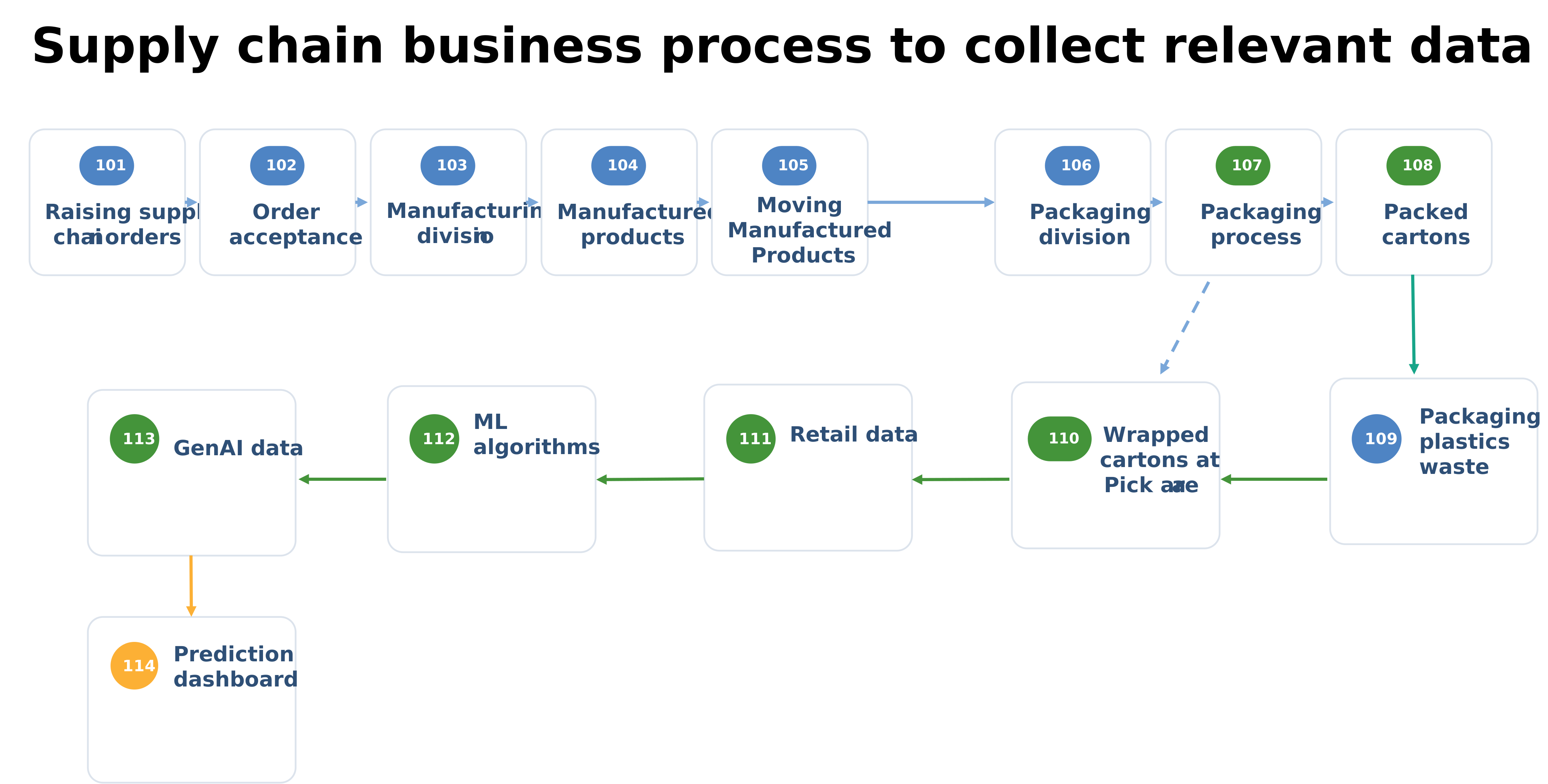
Figure 3
Supply chain business process to collect relevant data
Figure 3
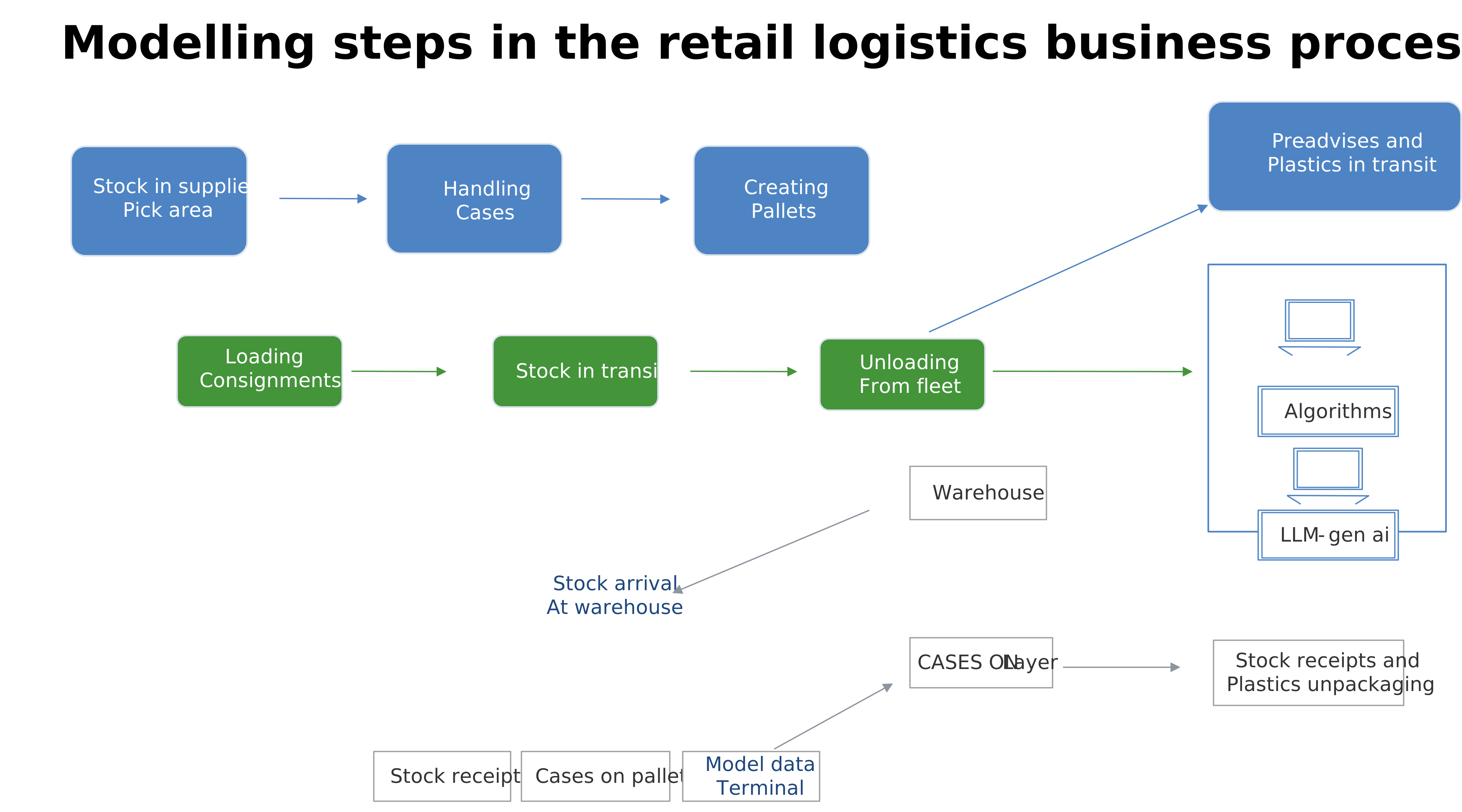
Figure 4
Modelling steps in the retail logistics business process
Figure 4
The aforementioned graphic shows the retail logistics flow, from Stock in Supplier Pick Area through Handling Cases, Creating Pallets and Loading Consignments into Stock in Transit and Unloading from Fleet, reaching Stock Arrival at Warehouse and finally Stock Receipts and Plastic Unpackaging, where plastic unpackaged on receipts are captured.
Stage |
Key Activities / Data Required |
Output / Expected Result |
1. Data Collection |
Collect supplier, store and product data across supply chain systems like production volumes, packaging materials, plastic type & weight, wastage metrics and store-level unpackaging - as illustrated in Figure 4. |
Consolidated and validated dataset covering supplier, product, order, packaging and waste information. |
2. Data Preprocessing |
Clean, deduplicate and standardise the data. Encoding categorical fields and scaling numerical ones such as quantity, plastic weight, cost and effort. |
A clean, consistent and model-ready dataset. |
3. Data Generation Using Agentic RATIO |
In case of missing supplier data the approach can be used to generate purchase orders & populate plastic type, weight, usage, handling effort and cost from product and order context. |
A supplemented dataset with generated values filling the gaps. |
4. Model Training |
Train SVM, MLPC and Decision Tree on features from purchase order, manufacturing, supplier, store and logistics data that is split into training and testing sets, to predict waste by supply chain stage. |
Trained models predicting plastic waste at each stage. |
5. Model Evaluation |
Evaluation based on the testing set using validation techniques including dimensionality reduction, feature selection and k-fold cross-validation. |
Measured model accuracy and confidence in predictions. |
A multi-model VLM approach improves confidence in plastic waste predictions by validating outputs across leading AI models while balancing accuracy and operational cost. This enables retailers to make data-driven sustainability decisions using the most appropriate model for each use case.
Model |
Confidence* |
Cost Efficiency |
Recommended Use Case |
Gemini |
85% |
High |
Primary model for large-scale image and packaging analysis |
GPT |
88% |
Medium |
Balanced validation of routine predictions |
Claude |
92%+ |
Lower |
Secondary validation for high-value or low-confidence cases |
Table 3: Illustrative model comparison based on confidence, cost efficiency and recommended usage.
Recommendation
Use Gemini as the primary model for high-volume image processing and leverage GPT or Claude to validate low-confidence or business-critical predictions. This multi-model approach balances cost, accuracy, and trust, improving the reliability of plastic waste forecasts and the resulting sustainability decisions.
Note: Confidence scores are illustrative and should be validated using retailer-specific data and model benchmarking.
Use Cases
For a UK-based retailer, we applied our approach to the historical data to evaluate plastic use, handling effort and cost across the supply chain. We used supplier orders, packaging data, store-level unpackaging, using our approach to generate any data to fill the gaps.
The approach successfully calculated historical usage and predicted future plastic waste across time periods. This helped the retailer identify reduction opportunities, optimise packaging, and lower handling effort. The Decision Tree, in particular, effectively supported plastic waste prediction and sustainability decisions.
Day |
Week |
Month |
Year |
|
Number of supplier orders |
139 |
1052 |
2125 |
24000 |
Plastic usage in Kilogram (KG) |
203.87 |
1689.98 |
3535.51 |
39345.19 |
Total cost for handling plastic waste at retail locations in GBP (£) |
498.59 |
4167.19 |
8648.81 |
96945.16 |
Total effort for handling plastic waste at a retail location in person hours |
11.1 |
93.29 |
194.88 |
2173.99 |
Table 1: Summary statistics of calculations on historical data for a retailer
Day |
Week |
Month |
Year |
|
Number of supplier orders |
133 |
932 |
4133 |
48600 |
Plastic usage in Kilogram (KG) |
214.29 |
1502.69 |
6700.91 |
78763.13 |
Total cost for handling plastic waste at retail locations in GBP (£) |
530.67 |
3713.29 |
16565.29 |
194860.77 |
Total effort for handling plastic waste at a retail location in person hours |
12.33 |
84.8 |
378.94 |
4455.2 |
Table 2: Summary statistics of predictions on futuristic data for a retailer
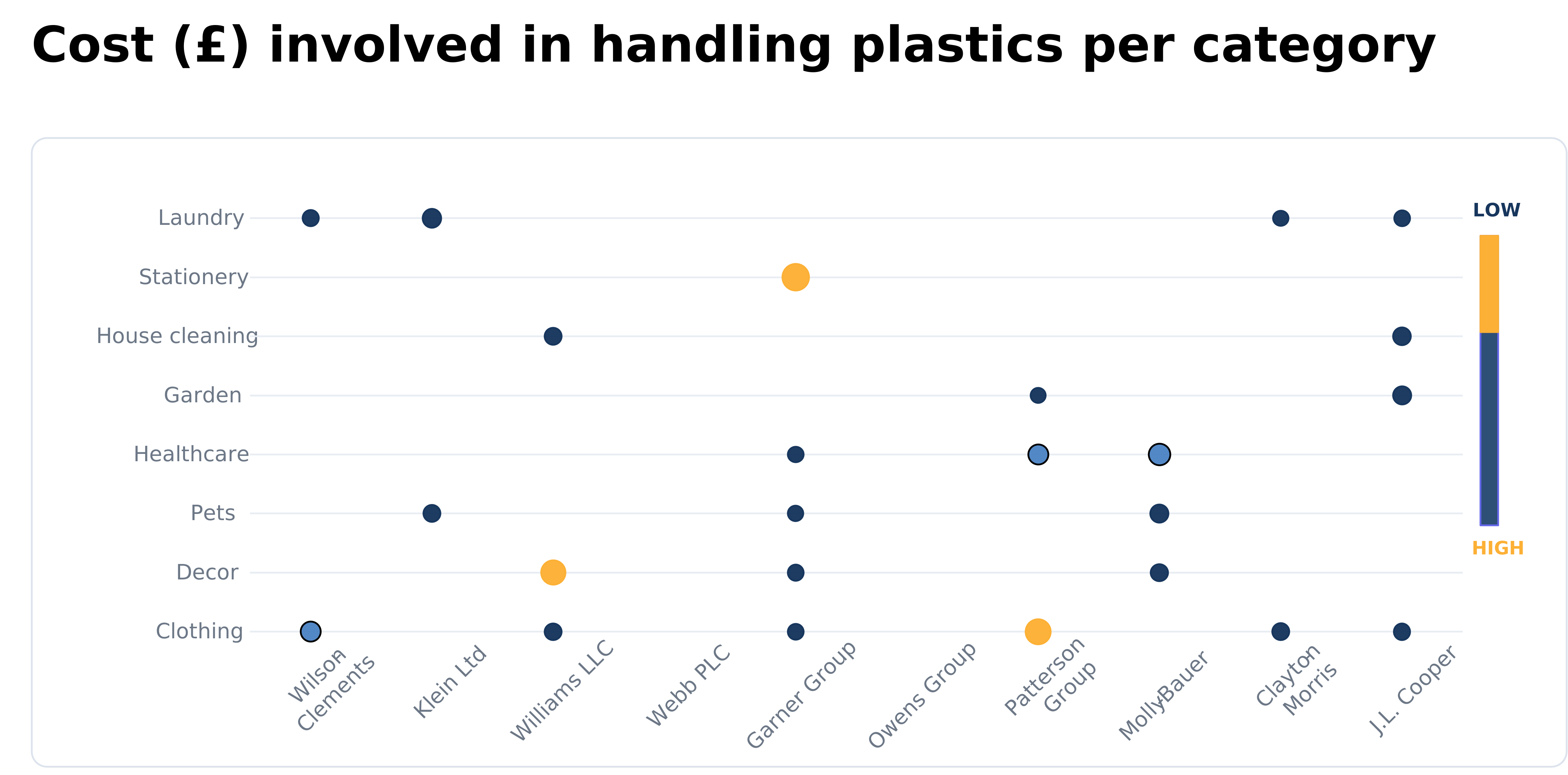
Figure 5
Statistics on calculations on historical manufacturing data
Figure 5
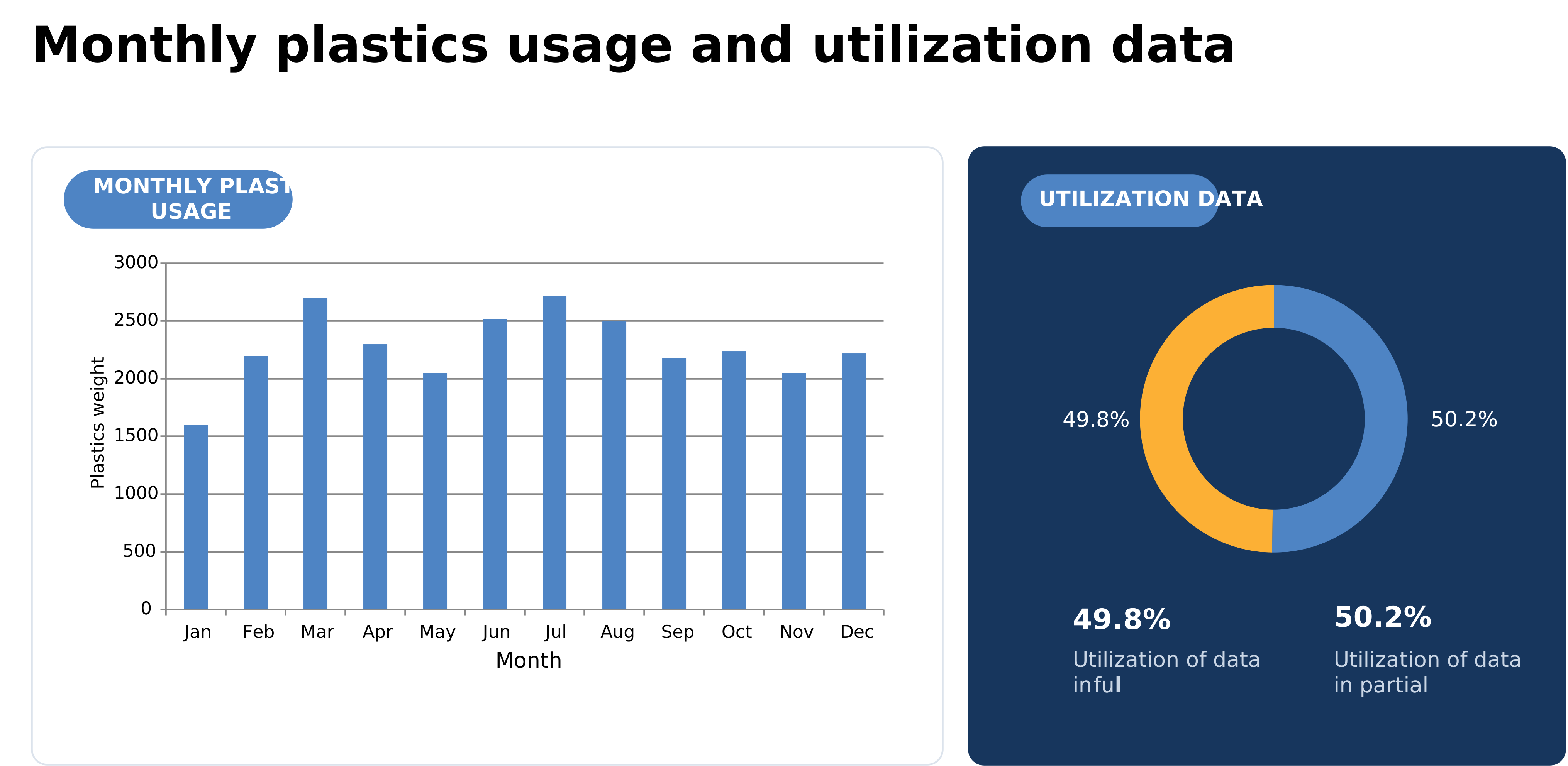
Figure 6
The graphical representation on monthly plastic use and utilization data on retailer data
Figure 6
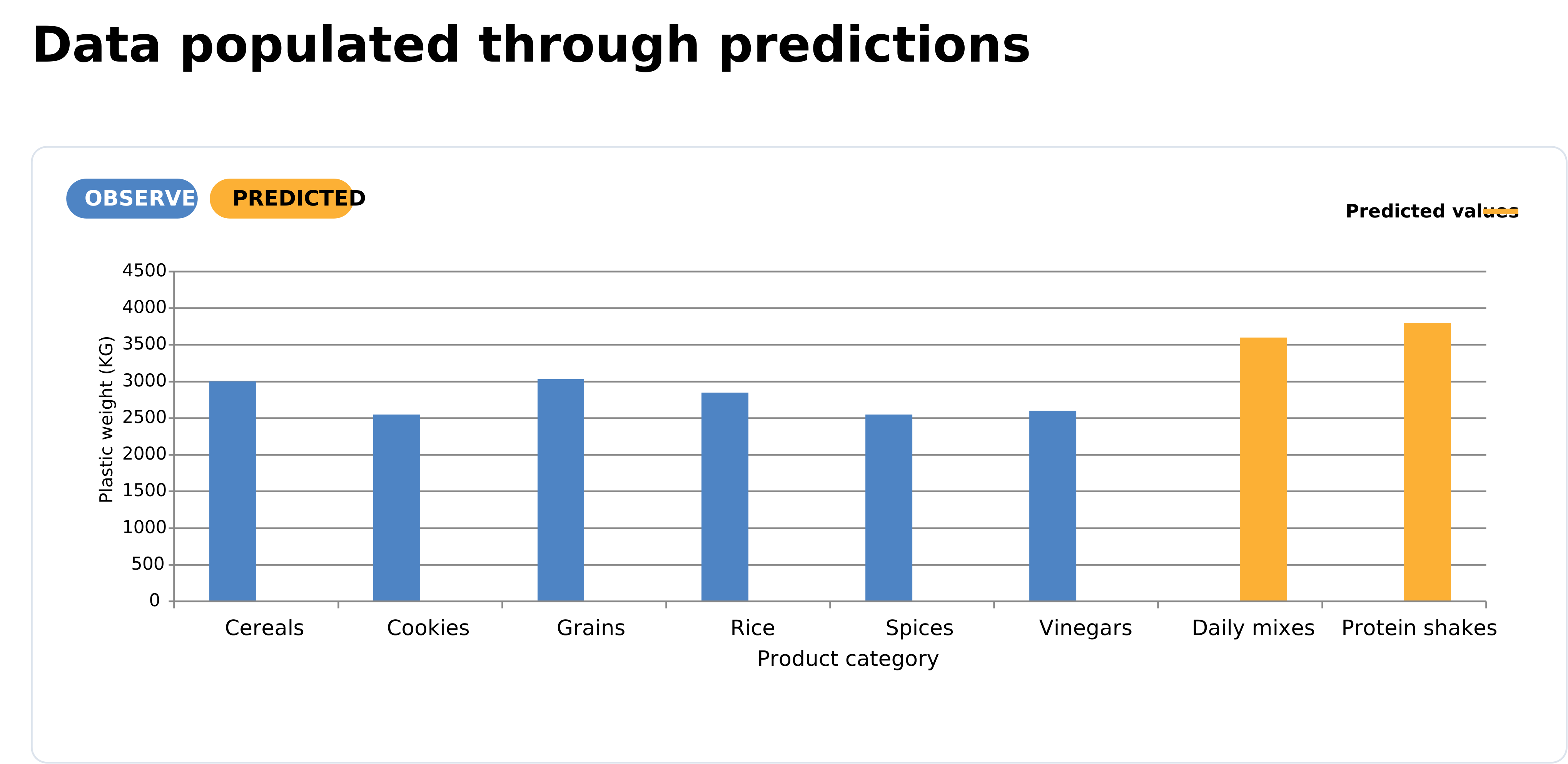
Figure 7
Graph on plastic wastage across product categories
Figure 7
Predict to win
The approach spans the acquisition and preparation of retail supply chain data, addresses the missing data. It then applies supervised machine learning to predict waste to ensure effective overall reduction. Here’s a quick look at the overall process:
1. Predicting starts with:
- acquisition of purchase order and manufacturing data in standard format, with GenAI filling data gaps via LLMs and RAG
- preprocessing for data consistency and quality ahead of the chosen algorithms
- feature extraction on product details, packaging type, quantity ordered and production volume as model input
- training of SVM, MLPC and Decision Tree models validated using evaluation metrics for accuracy and performance
2. The SVM model optimises hyperparameters and decision boundaries on input features.
3. The MLPC model uses backpropagation to adjust weights and biases across interconnected neurns.
4. The Decision Tree model builds a hierarchy of decisions based on feature values.
Predict, reduce
Accurate plastic waste prediction using a hybrid version of GenAI and machine learning can help retailers gauge waste across the supply chain backed by historical purchase orders and manufacturing data. In addition, it can point to areas with most plastic waste, which can help draw focus on reduction efforts in high-impact zones and implement better sustainability standards.
Our proposed approach can help reduce costs from disposal, recycling, and excess packaging and help improve resource utilisation. The approach also offers retailers a cost-effective method to become more sustainable by predicting and reducing plastic packaging waste.
The bottom line Retailers looking to ensure more sustainable and environment conscious practices in their supply chains stand to win by using the model. It can help identify data sources and recommend reductions through efficient algorithms leading to optimised supply chain processes, lower cost and reduced environmental impact. |
The tables, figures and terminology presented are original to this paper; however, they are based on broadly accepted industry concepts and are generic in nature. They are not intended to represent proprietary intellectual property.
Acknowledgement: We acknowledge valuable insights and inputs from Rajesh Arockiasamy through the development of this white paper. His expertise and thoughtful perspectives helped shape and enrich the content presented in this publication.